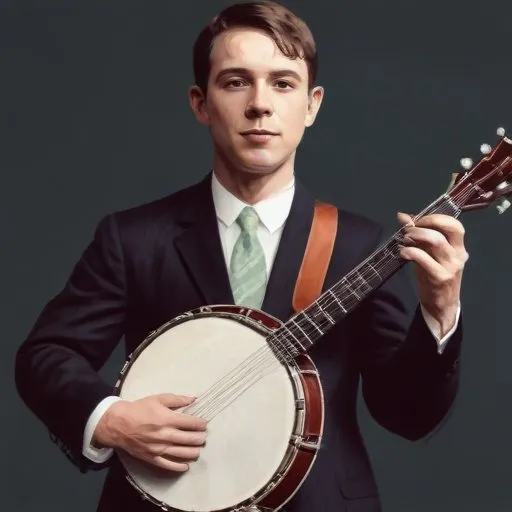
Eddie Condon: The Jazz Maestro and Chicago Legend
Eddie Condon was a renowned American jazz banjoist, guitarist, and bandleader, known for his instrumental virtuosity and pioneering spirit in the Chicago jazz scene. With a career spanning over five decades, Condon left an indelible mark on the world of jazz, earning him a reputation as one of the most influential musicians of his time.
Early Life and Career
Born on November 16, 1905, in Goodland, Indiana, Condon grew up in Momence, Illinois, and Chicago Heights, Illinois. He began playing the ukulele at a young age, eventually switching to the banjo, which became his signature instrument. By 1921, Condon was a professional musician, playing with various bands and musicians in the Chicago area.
Rise to Prominence
In the 1920s, Condon formed the Chicago Rhythm Kings with Red McKenzie, a group that featured some of the most prominent jazz musicians of the time, including
Bix Beiderbecke,
Jack Teagarden, and Frank Teschemacher. During this period, Condon also frequented the legendary Lincoln Gardens and Sunset Café, where he learned from and was inspired by the likes of King Oliver and
Louis Armstrong.
New York City and the Recording Scene
In 1928, Condon moved to New York City, where he became a sought-after-session musician, arranging and playing on numerous recordings with jazz legends such as Louis Armstrong,
Fats Waller, and Henry
Red Allen. Condon's ability to bring together musicians of different racial backgrounds for recording sessions was groundbreaking for its time, making him a trailblazer in the fight against racial segregation in jazz.
Eddie Condon's Nightclub and Legacy
In the 1940s and 1950s, Condon owned and operated his own nightclub in New York City, aptly named Eddie Condon's. The club became a hub for jazz enthusiasts, featuring performances by Condon himself, as well as other notable musicians. Throughout his life, Condon continued to perform, record, and promote jazz, earning him a reputation as one of the genre's most dedicated and passionate ambassadors.
Awards and Honors
Condon's contributions to jazz were recognized with numerous awards and honors, including a Grammy Lifetime Achievement Award, induction into the DownBeat Jazz Hall of Fame, and a star on the Hollywood Walk of Fame.
Personal Milestones and Key Life Events
- Received his first union card at the age of 15 in Waterloo, Iowa
- Formed the Chicago Rhythm Kings with Red McKenzie in 1925
- Moved to New York City in 1928
- Opened Eddie Condon's nightclub in the 1940s
Quotes and Memorable Sayings
"I think jazz is the most democratic of all the arts. It's the only one where you can't do it alone." - Eddie Condon
Historical Context and Legacy
Eddie Condon's impact on jazz and American music as a whole cannot be overstated. He was a true pioneer, pushing the boundaries of racial segregation and helping to establish jazz as a legitimate art form. Today, Condon's legacy lives on through his music, his nightclub, and the countless musicians he inspired and influenced throughout his life.
FAQ
What was Eddie Condons early life and music career like?
Eddie Condon was born on November 16, 1905, in Goodland, Indiana. He began playing the guitar and banjo at a young age and started his professional music career in the 1920s, performing with various bands and orchestras. Sub-question: What was Eddie Condons role in the development of Dixieland jazz?
What instruments did Eddie Condon play?
Eddie Condon was a skilled guitarist and banjo player, and he often performed on both instruments during his live shows and recordings.
What were some of Eddie Condons notable recordings?
Eddie Condon recorded several albums throughout his career, including Eddie Condons Treasury of Jazz and Eddie Condons All-Stars.
Did Eddie Condon have any notable collaborations or friendships?
Eddie Condon was known for his collaborations with other jazz musicians, including Louis Armstrong, Duke Ellington, and Coleman Hawkins.
What was Eddie Condons impact on the jazz scene?
Eddie Condon was a influential figure in the jazz scene, known for his unique playing style and his contributions to the development of Dixieland jazz.