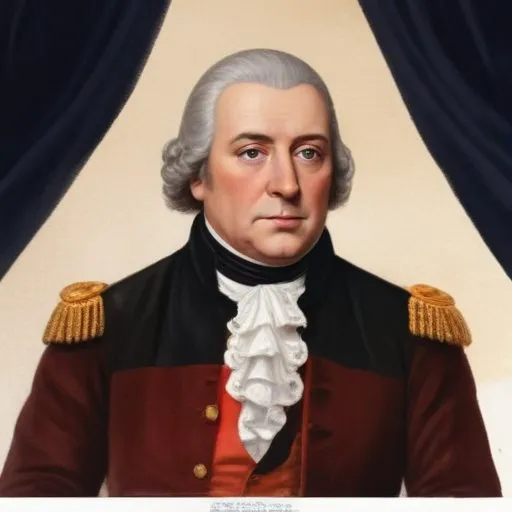
Sir Edmund Andros: The Controversial Colonial Administrator
A Turbulent Tenure in British America
Sir Edmund Andros is best known for his tumultuous reign as the governor of the Dominion of New England during its brief three-year existence. His authoritarian style and pro-Anglican views often put him at odds with the predominantly Puritan population, ultimately leading to his overthrow in the 1689 Boston revolt.
Early Life and Career
Born on December 6, 1637, in London, Andros was the son of Amice Andros, a staunch supporter of Charles I and Bailiff of Guernsey. His mother, Elizabeth Stone, was a member of the royal court, and her sister was a courtier to Queen Elizabeth of Bohemia. Although Andros' early life is shrouded in mystery, it is believed that he was present at the surrender of Guernsey's Castle Cornet, the last royalist stronghold to surrender in the English Civil War.
Rise to Power
Andros' administrative career began in 1674, when he was appointed Bailiff of Guernsey, a position he held for over a decade. During this time, he cultivated a reputation as a skilled and effective administrator, earning the trust of the British monarchy.
Governor of New England
In 1686, Andros was appointed governor of the Dominion of New England, a newly formed entity that encompassed present-day Massachusetts, New Hampshire, Maine, and Rhode Island. His tenure was marked by controversy, as he enforced the Navigation Acts, restricted town meetings, and imposed taxes without consent. These actions outraged the local population, leading to the eventual Boston revolt and his subsequent overthrow.
Later Career and Legacy
After his fall from power, Andros went on to serve as governor of New York, East and West Jersey, Virginia, and Maryland. Although his authoritarian style still sparked controversy, he was generally considered a more effective governor in these colonies. One of his most significant achievements was negotiating the Treaty of the Covenant Chain with the Iroquois, establishing a lasting peace between the colonies and the Iroquois Confederacy.
Legacy and Impact
Andros' legacy is complex and multifaceted. While his authoritarian style and pro-Anglican views polarized many, he was also a skilled administrator who effectively governed multiple colonies. His negotiations with the Iroquois Confederacy had a lasting impact on colonial history, and his administrative style influenced future generations of colonial administrators.
Personal Life and Later Years
Andros returned to England in 1698 and resumed his role as Bailiff of Guernsey. He served as lieutenant governor of the island for four years, eventually passing away on February 24, 1714, at the age of 76.
Trivia and Fun Facts
- Andros was known for his love of fine clothing and impressed his contemporaries with his stylish attire.
- He was fluent in multiple languages, including French, Spanish, and Dutch.
- Andros was a skilled military strategist and led several successful campaigns against Native American tribes.
By navigating the complexities of Andros' life and career, we gain a deeper understanding of the tumultuous world of colonial America and the men who shaped its history.
FAQ
What was Edmund Andross role in colonial America?
Edmund Andros was a prominent figure in colonial America, serving as the 4th Colonial Governor of New York and the Governor of Massachusetts Bay Colony. He played a significant role in shaping the colonial government and economy.
What was Edmund Andross relationship with the native American tribes?
Edmund Andros had a complex and often contentious relationship with the native American tribes. He negotiated several treaties with them, but also clashed with them over land and trade issues.
How did Edmund Andross governorship impact the colonial economy?
Edmund Andross governorship had a significant impact on the colonial economy. He implemented several policies to stimulate trade and commerce, including the creation of a new currency and the establishment of trade agreements with other colonies.
What was Edmund Andross role in the Glorious Revolution?
Edmund Andros played a significant role in the Glorious Revolution, which overthrew James II and VII and established William III and Mary II as the new monarchs. He was a strong supporter of James II and was imprisoned for his loyalty.
What is Edmund Andross legacy in American history?
Edmund Andross legacy in American history is that of a complex and often controversial figure who played a significant role in shaping the colonial government and economy. He is remembered as a skilled administrator and diplomat, but also as a sometimes brutal and authoritarian leader.