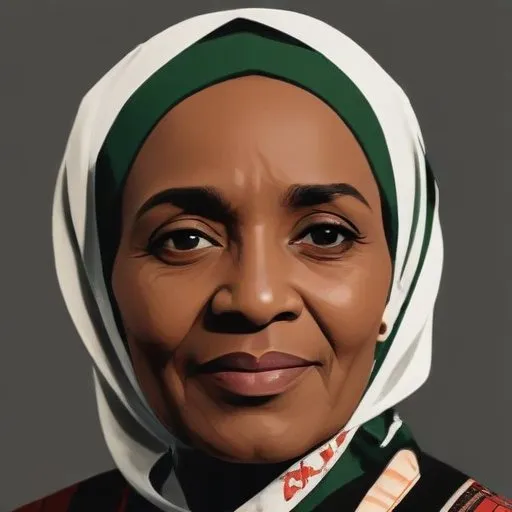
Edna Adan Ismail: A Trailblazing Nurse, Activist, and Stateswoman
A Pioneer in Healthcare and Human Rights
Edna Adan Ismail is a renowned nurse, midwife, and activist who has dedicated her life to improving the health and well-being of women and children in Somaliland and beyond. As the first female Foreign Minister of Somaliland from 2003 to 2006, she has been a vocal advocate for human rights, particularly in the area of female genital mutilation (FGM).
Early Life and Education
Born on September 8, 1937, in Hargeisa, Somalia, Ismail is the daughter of a prominent Somali medical doctor. Despite the fact that girls were not educated in Somaliland at the time, her father hired a tutor for her to learn to read and write with local boys. She later attended a school in Djibouti, where her aunt was a teacher. Ismail's early life was marked by a traumatic experience - she underwent FGM at the age of eight, an experience that would later drive her to become an activist against the practice.
Career Highlights
Ismail trained as a nurse and midwife in the United Kingdom at the Borough Polytechnic (now London South Bank University). She became Somaliland's first qualified nurse-midwife and the first Somali woman to drive. Her dedication to healthcare led her to build a hospital in Hargeisa, Somaliland's capital, in 1980. Although she was forced to leave the country due to the beginning of the Somali Civil War, she eventually returned to establish the Edna Adan Maternity Hospital in 2002.
Activism and Human Rights
Ismail is a pioneering figure in the struggle against FGM. Her personal experience and professional expertise have made her a powerful advocate for the abolition of the practice. She is the founder and president of the Organization for Victims of Torture, and has worked tirelessly to promote human rights and dignity for women and children.
Awards and Honors
Ismail's contributions to healthcare, human rights, and women's empowerment have been recognized with numerous awards and honors. She was awarded the Prix Femmes de Coeur Award in 2004, the Woman of Achievement Award in 2006, and the Van den Bergh Award in 2010.
Personal Life
Ismail was married to Mohamed Haji Ibrahim Egal, a Somali politician who served as Prime Minister of Somalia and later President of Somaliland.
Legacy
Edna Adan Ismail's remarkable life and achievements have inspired generations of women and girls in Somaliland and beyond. Her tireless work in promoting healthcare, human rights, and women's empowerment has left a lasting impact on her community and the world at large.
- Key Facts:
- Born: September 8, 1937, Hargeisa, Somalia
- First female Foreign Minister of Somaliland (2003-2006)
- Founder and director of Edna Adan Maternity Hospital
- President of the Organization for Victims of Torture
FAQ
What was Edna Adan Ismails role in Somaliland politics?
Edna Adan Ismail was a Somaliland politician and activist who served as the Minister of Family Welfare and Development. She was a pioneering figure in promoting womens rights and healthcare in Somaliland.
What were Edna Adan Ismails achievements in healthcare?
Edna Adan Ismail was a nurse and midwife who founded the Edna Adan University Hospital in Hargeisa, Somaliland. She was a strong advocate for maternal and child healthcare, and her hospital has become a model for healthcare delivery in the region.
Did Edna Adan Ismail receive any notable awards?
Yes, Edna Adan Ismail received several awards for her humanitarian work, including the Prix Femmes de Méditerranée Award and the Womens eNews 21 Leaders for the 21st Century Award.
What was Edna Adan Ismails background?
Edna Adan Ismail was born in 1932 in Hargeisa, Somaliland. She studied nursing and midwifery in London and went on to become a dedicated healthcare worker and politician.
What is Edna Adan Ismails legacy in Somaliland?
Edna Adan Ismails legacy in Somaliland is that of a trailblazing figure who has worked tirelessly to promote womens empowerment, healthcare, and education in her country. She remains a beloved and respected figure in Somaliland.