


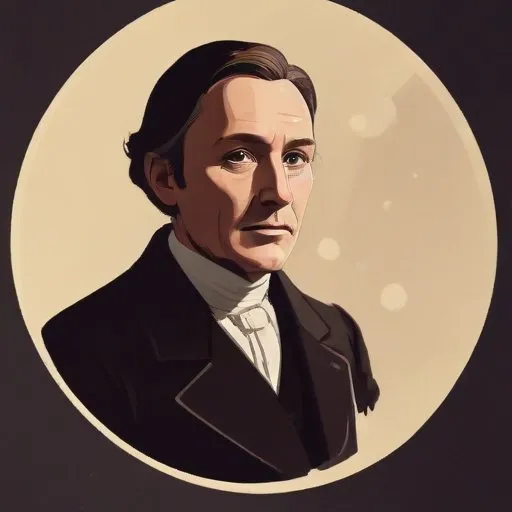
Pioneering astronomer and physicist who developed spectroscopy and discovered the first spectroscopic binary star, revolutionizing our understanding of celestial bodies.
Renowned for his groundbreaking discoveries in astronomy, Edward Charles Pickering was an American astronomer and physicist who left an indelible mark on the scientific community. Alongside Carl Vogel, he discovered the first spectroscopic binary stars, a findings that revolutionized our understanding of celestial bodies.
Born on July 19, 1846, in Boston, Massachusetts, Pickering was part of a distinguished family that valued education and culture. His brother, William Henry Pickering, was a graduate of MIT and professor of physics and astronomy, while his father, Edward Pickering, was a respected figure in the community. From a young age, Pickering was fascinated by the stars, constructing his own telescope at the age of 12.
He pursued his passion for science at Boston Latin School and later at the Lawrence Scientific School at Harvard (now known as the Harvard John A. Paulson School of Engineering and Applied Sciences), where he earned his Bachelor of Science degree in 1865.
Immediately after graduating from Harvard, Pickering was hired as an instructor of mathematics, and a year later, he joined the Massachusetts Institute of Technology as an assistant professor of physics. In 1868, he became the Thayer Professor of Physics, succeeding William Barton Rogers.
During his 10-year tenure at MIT, Pickering's research focused on astronomy and physics, leading to several notable discoveries. He wrote Elements of Physical Manipulations, a two-volume work that showcased his expertise in the field.
Beyond his scientific pursuits, Pickering was an avid mountain climber, bicyclist, and football enthusiast. He was also a cofounder and first president of the Appalachian Mountain Club, reflecting his love for the outdoors.
A music lover, Pickering appreciated classical music and was part of a culturally rich family. He married Lizzie Wadsworth Sparks in 1874, and after her passing in 1906, he continued to devote himself to his work until his own passing on February 3, 1919.
Edward Charles Pickering's contributions to astronomy and physics have had a lasting impact on our understanding of the universe. His pioneering work, passion for science, and commitment to applying knowledge to real-world problems have inspired generations of scientists and scholars.
Through his groundbreaking discoveries and dedication to his craft, Pickering has secured his place as one of the most influential scientists of his time, leaving a legacy that continues to inspire and educate future generations.
Born in 1885
Measured the galaxy's size and mapped the Milky Way's structure, revolutionizing our understanding of the universe.
Born in 1877
Developed the Hertzsprung-Russell diagram, a fundamental tool in astronomy that relates stars' brightness to their surface temperature. This diagram is still widely used today to understand the life cycles of stars.
Born in 1863
Pioneering astronomer who classified over 350,000 stars and developed a system of stellar classification still used today. Her work paved the way for future astronomers to better understand the universe.
Born in 1910
A renowned scientist who pioneered our understanding of black holes and the behavior of stars, earning a Nobel Prize in Physics in 1983.
Born in 1882
A pioneer in astrophysics, he formulated the Eddington limit, a crucial concept in understanding stars, and was a key figure in popularizing Einstein's theory of relativity. His work bridged the gap between theory and observation in astronomy.
Born in 1868
Founded the Mount Wilson Observatory, pioneered the field of astrophysics, and developed innovative telescopes, making groundbreaking discoveries about the sun and stars.
Born in 1875
First American woman to earn a pilot's license, breaking gender barriers in aviation, and also a pioneering screenwriter in the early film industry.
