


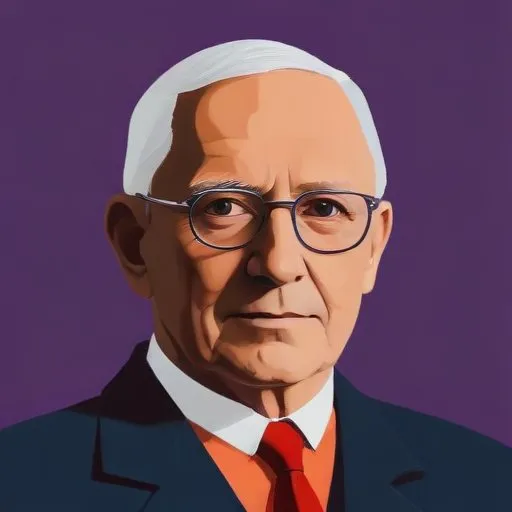
A pioneering educator and politician who played a key role in shaping New South Wales' education system and served as Chief Secretary. He's remembered for his efforts to establish a more accessible and equitable education system.
Sir Edward Deas Thomson is renowned for his instrumental role in shaping the administrative landscape of Australia, particularly in his capacity as Chancellor of the University of Sydney. Throughout his illustrious career, he made significant contributions to education, politics, and public service, earning the respect and admiration of his contemporaries.
Born on June 1, 1800, in Edinburgh, Scotland, Thomson was the son of Sir John Deas Thomson, accountant-general to the navy, and Rebecca Freer. He received a solid education at Edinburgh High School and Harrow in England, followed by two years of study in Caen, Normandy, under the guidance of tutor Joseph Lowe.
Thomson's early career was marked by his work with his father in reorganizing the naval accounting system. In 1826, he traveled to the United States and Canada, and upon his return, he accepted the position of registrar of the orphan chambers at Demerara. However, he soon exchanged this role for that of clerk to the New South Wales legislative and executive councils.
Arriving in Sydney in December 1828, Thomson quickly proved himself to be a valuable officer. His tact and experience made him an asset during the governorship of Sir George Gipps, and he played a crucial role in the passing of the constitution bill. In recognition of his services, he was sent with William Wentworth to England to see the bill through the Imperial parliament.
In 1837, Thomson became Colonial Secretary at a salary of £1,500 a year, a position he held for nearly 20 years. During this tenure, he demonstrated exceptional administrative skills, earning the respect of his peers and facilitating the smooth functioning of the colony.
In 1854, Thomson was honored with a public testimonial, with half the amount subscribed being expended on a piece of plate and the remainder used to establish a scholarship in his name at Sydney University. This recognition of his services culminated in his appointment as Chancellor of the University of Sydney, a position he held until his death in 1879.
Sir Edward Deas Thomson's life and legacy serve as a powerful reminder of the importance of education, public service, and dedication to the greater good. His contributions to Australian history continue to inspire and motivate individuals to this day.
Born in 1815
A pioneering figure in Australian politics, instrumental in shaping the country's federation and unity, known for his tireless advocacy for a unified Australia.
Born in 1820
The 6th Premier of New South Wales, a pioneering leader who played a crucial role in shaping the Australian state's early development, particularly in education and infrastructure.
Born in 1818
The 4th Premier of New South Wales, a key figure in Australian politics, known for his role in shaping the country's early development and infrastructure. He played a crucial part in establishing the colony's education system.
Born in 1787
Served as a U.S. Representative from Virginia and later as a judge, known for his strong stance against slavery and secession. Played a key role in the American Civil War era.
Born in 1845
The 4th Prime Minister of Australia, a Scottish-Australian lawyer and politician who served from 1904 to 1905, known for his role in shaping the country's early years and contributing to its growth.
Born in 1857
The 16th Premier of New South Wales, a key figure in Australian politics, known for his significant contributions to the country's education and infrastructure development. He played a crucial role in shaping the state's future during his tenure from 1904 to 1907.
Born in 1844
The 13th Premier of New South Wales, a prominent figure in Australian politics, served from 1899 to 1901 and implemented significant reforms in education and labor laws. He's remembered for his progressive policies and commitment to social justice.
62 Years Old
South Korean-American football player who played as a midfielder for the South Korea national team and various clubs, including the LA Galaxy. He's known for his speed and agility on the field.
