


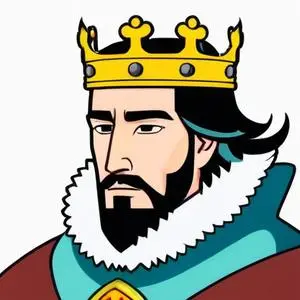
Conqueror of Wales and hammer of the Scots, he strengthened the English monarchy and established parliamentary representation.
Edward I, also known as Edward Longshanks and the Hammer of the Scots, was a formidable king who ruled England from 1272 to 1307, leaving an indelible mark on the country's history. He was a skilled military strategist and a shrewd politician, known for his conquests of Wales and Scotland, as well as his significant reforms to the English monarchy and law.
The eldest son of King Henry III, Edward was born in 1239 and began his political career at a young age. He played a key role in his father's reign, supporting the Provisions of Oxford, a baronial reform movement, in 1259. After a brief reconciliation with his father, he remained loyal to him throughout the subsequent armed conflict, known as the Second Barons War.
Edward's military prowess was evident during the Battle of Lewes in 1264, where he was held hostage by the rebellious barons. However, he managed to escape and later defeated the baronial leader Simon de Montfort at the Battle of Evesham in 1265, effectively ending the rebellion.
In 1270, Edward left to join the Ninth Crusade to the Holy Land, but was recalled to England in 1272 upon his father's death. He was crowned at Westminster Abbey in 1274 and began his reign, marked by a series of military campaigns and reforms.
Edward's conquest of Wales in 1277-1283 brought the country under English rule, with the establishment of castles, towns, and settlements. He also reformed the English law, conducting a comprehensive legal inquiry into feudal liberties and issuing a series of statutes regulating criminal and property law.
His most notable military achievement was the invasion of Scotland in 1296, claiming feudal suzerainty over the country. The resulting First Scottish War of Independence lasted until 1357, but Edward's legacy as the Hammer of the Scots was cemented.
Edward I's reign had a lasting impact on English history, shaping the country's political, legal, and social landscape. His military conquests expanded England's borders, while his reforms to the monarchy and law laid the foundation for a more centralized government.
His legacy extends beyond England, with his campaigns in Scotland and Wales influencing the history of these nations. The castles and towns he established continue to stand as testaments to his military prowess and architectural achievements.
Edward I's reign was marked by a desire for power, conquest, and reform. He was a master strategist and a skilled politician, able to navigate complex political landscapes and secure his position as one of England's most influential monarchs.
In the context of medieval England, Edward's reign marked a significant shift towards a more centralized and powerful monarchy. His reforms to the law and the English government paved the way for future monarchs, solidifying his place as a vital figure in English history.
Today, Edward I is remembered as a complex and multifaceted figure, whose military campaigns and reforms continue to shape our understanding of medieval England and its place in world history.
Born in 1052
King of France from 1060 to 1108, known for his military campaigns and conflicts with the Church, particularly his excommunication by Pope Urban II.
Born in 1274
Led Scotland during the First War of Scottish Independence, ultimately securing a decisive victory at the Battle of Bannockburn and earning recognition as the country's rightful king. He's celebrated for his bravery, strategic thinking, and unwavering commitment to Scottish freedom.
