


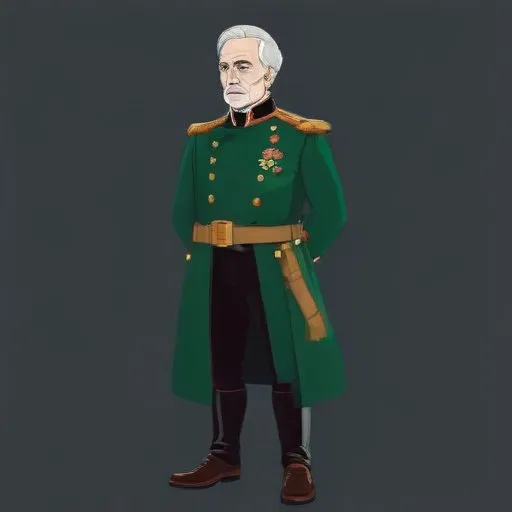
Anglo-Irish general and politician who led British forces during the Napoleonic Wars, particularly at the Battle of New Orleans, and served as MP for Longford.
Edward Pakenham is remembered as a brave and skilled military commander who played a significant role in the Peninsular War and the War of 1812. He is best known for leading the British forces in the Battle of New Orleans, where he met his untimely death in 1815.
Born on March 19, 1778, at Pakenham Hall in County Westmeath, Ireland, Edward Pakenham was the son of Edward Pakenham, 2nd Baron Longford, and his wife Catherine Rowley. He received his education at The Royal School in Armagh.
Pakenham's military career began at the tender age of 16, when his family purchased his commission as a lieutenant in the 92nd Regiment of Foot. He served with the 23rd Light Dragoons against the French in Ireland during the 1798 Rebellion and later in Nova Scotia, Barbados, and Saint Croix. He led his men in an attack on Saint Lucia in 1803, where he was wounded.
He also fought in the Danish campaign at the Battle of Copenhagen in 1807 and in Martinique against the French Empire, where he received another wounding. In 1806, his sister Catherine married Arthur Wellesley, the future Duke of Wellington, with whom he would later serve in the Peninsular War.
As adjutant-general, Pakenham joined his brother-in-law, the Duke of Wellington, in the Peninsular War. He commanded a regiment in the Battle of Bussaco in 1810 and in 1811 fought in the Battle of Fuentes de Onoro to defend the besieged fortress of Almeida, helping to secure a British victory.
In 1812, he was praised for his performance at Salamanca, where he commanded the Third Division and hammered onto the flank of the extended French line. He also received the Army Gold Cross and clasps for his bravery in the battles of Martinique, Bussaco, and Salamanca.
In 1814, Pakenham was dispatched to North America to lead the British forces in the War of 1812. He arrived in New Orleans in December 1814, with the task of capturing the strategic port city. On January 8, 1815, he led his men into battle, but was killed in action while trying to rally his troops.
Despite his untimely death, Pakenham's bravery and military prowess have been recognized by historians and contemporaries alike. His legacy is marked by his fearlessness and skill on the battlefield, as well as his close relationship with his brother-in-law, the Duke of Wellington.
In his personal life, Pakenham was known for his strong sense of duty and loyalty to his country and family. He was also known for his charm and good looks, earning him the affection of his men and the respect of his enemies.
Edward Pakenham's life may have been cut short, but his bravery and military prowess continue to inspire and fascinate historians and military enthusiasts to this day.
Born in 1822
Union general during the American Civil War, known for his disastrous defeat at the Second Battle of Bull Run. He was relieved of his command and later served in the Indian Wars.
