


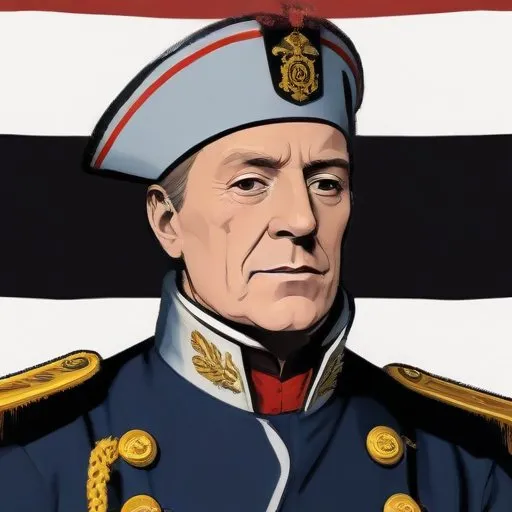
Led a British naval expedition that captured Porto Bello in 1739, and is also known for being the commander of a fleet that besieged Cartagena de Indias in 1741.
Meet Edward Vernon, a Royal Navy officer and politician who left an indelible mark on history with his swashbuckling naval career and an unexpected legacy in the world of mixology. Best known for being the eponym of George Washington's estate, Mount Vernon, and unwittingly giving birth to the concept of "grog," a rum-based cocktail staple.
Born on November 12, 1684, in Westminster, London, Vernon was the second son of James Vernon, secretary of state to William III. His family background played a significant role in shaping his future, with his brother James going on to become a British envoy to Denmark and a member of parliament.
Vernon's entry into the Royal Navy on May 10, 1700, marked the beginning of a storied career that would span over four decades. He defied convention by receiving a secondary education, a rarity among Royal Navy officers of his time. His early years saw him serve on various ships, including the HMS Shrewsbury, HMS Ipswich, and HMS Mary.
Vernon's big break came during the War of the Spanish Succession, where he played a pivotal role in several key battles. His promotion to lieutenant in 1702 was followed by a series of appointments to prestigious ships, including the HMS Lennox and the HMS Mary. The war saw him serve in both the Channel Squadron and the Mediterranean, eventually paying off in March 1704.
Vernon's eccentricity earned him the nickname "Old Grog," thanks to his penchant for wearing coats made of grogram cloth. This peculiar habit inadvertently led to the creation of "grog," a rum-based cocktail that became a staple in naval culture. Vernon introduced the concept of diluting rum with water to reduce its potency, making it a more palatable choice for his sailors.
Vernon's political career was marred by controversy, with critics accusing him of being outspoken and reckless in his opinions. Despite this, he served as a Member of Parliament on three occasions, using his platform to advocate for naval reforms. His legacy extends beyond his military and political accomplishments, with his name becoming synonymous with the concept of grog and his estate, Mount Vernon, serving as a testament to his lasting impact.
Vernon's influence on modern society extends far beyond his military and political accomplishments. His unwitting creation of the concept of grog has made him a legendary figure in the world of mixology. His estate, Mount Vernon, serves as a testament to his lasting impact, with numerous places in the United States named in its honor.
Vernon's remarkable life serves as a testament to the power of innovation, perseverance, and a hint of eccentricity. As we raise a glass of grog in his honor, we celebrate the man behind the legend – a true trailblazer in every sense of the word.
66 Years Old
A renowned jockey and trainer, he won numerous prestigious races, including the Epsom Derby and St. Leger Stakes, and was known for his exceptional riding skills and innovative training methods.
