


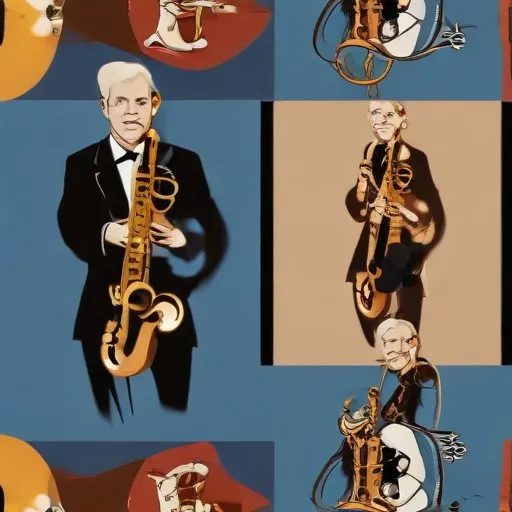
A renowned Finnish jazz saxophonist, composer, and conductor, celebrated for his eclectic and innovative style, blending traditional jazz with modern classical and folk elements.
Eero Koivistoinen is a renowned Finnish jazz musician, saxophonist, and composer, celebrated for his genre-bending approach to jazz and his contributions to the global music scene. With a career spanning over five decades, Koivistoinen has made a lasting impact on the Finnish jazz scene, earning him numerous accolades and international recognition.
Koivistoinen was born on January 13, 1946, in Helsinki, Finland. His introduction to jazz came through his sailor brother's record collection, which featured American jazz legends. This sparked a lifelong passion for the genre. Koivistoinen went on to study classical violin, saxophone, and composition at the prestigious Sibelius Academy, further honing his craft at Boston's Berklee College of Music.
In the mid-1960s, Koivistoinen formed his first lineup, featuring drummer Edward Vesala and bassist Pekka Sarmanto. This marked the beginning of his successful music career. In 1967, he became a member of the influential Finnish rock band Blues Section, with whom he performed until 1968. During this period, Koivistoinen released his debut solo album, Valtakunta, a literary record featuring compositions inspired by Finnish poetry.
Koivistoinen's subsequent solo albums, such as Wahoo (1972), garnered international recognition and critical acclaim. In 2006, he released XRay, a hip-hop influenced album featuring collaborations with Charles Salter, Bina Nkwazi, DJ LBJ, and Redrama. This experimentation showcased Koivistoinen's versatility and willingness to push boundaries.
Koivistoinen was a founding member of the UMO Jazz Orchestra, where he played from 1975 to 1990 and later served as artistic director from 1996 to 1998. In addition to his work with UMO, Koivistoinen has composed music for radio and theatre, further expanding his creative horizons.
Koivistoinen has received numerous awards and accolades for his contributions to jazz. Notable honors include the Yrjö Prize from the Finnish Jazz Association (1967), first place at the Montreux Jazz Festival with his quartet (1969), and the prize for best arrangement at the Nordring competition (1981) for his piece Ultima Thule.
Eero Koivistoinen's impact on Finnish jazz is undeniable. His innovative approach, eclectic style, and dedication to his craft have inspired generations of musicians. As a composer, musician, and educator, Koivistoinen continues to shape the jazz landscape, leaving an indelible mark on the global music community.
Today, Eero Koivistoinen remains an iconic figure in Finnish jazz, celebrated for his groundbreaking contributions and continued influence on the music world.
