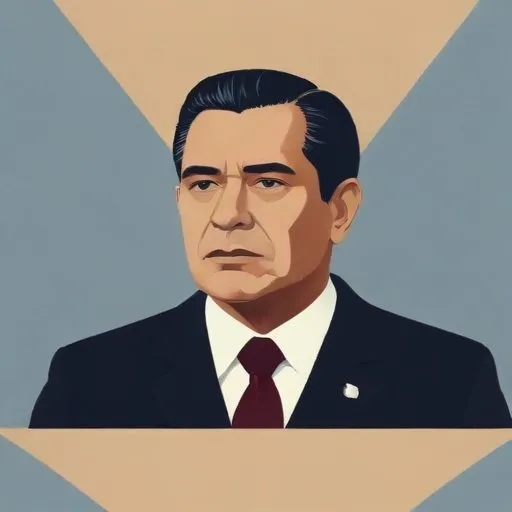
Efran Ros Montt: The Controversial Guatemalan Military Leader and Politician
A Turbulent Legacy of Power and Controversy
Efran Ros Montt, a Guatemalan military officer, politician, and dictator, is notorious for his brutal regime as de facto President of Guatemala from 1982 to 1983. During his tenure, he implemented counterinsurgency strategies that weakened Marxist guerrillas but also led to accusations of war crimes and genocide.
Military Background and Rise to Power
Born on June 16, 1926, Ros Montt's military career spanned several decades. He served as director of the Guatemalan military academy and rose to the rank of brigadier general. In 1973, he briefly held the position of chief of staff of the Guatemalan army but was soon forced out due to differences with the military high command.
Political Ambitions and Coup d'État
Ros Montt's political ambitions led him to run for president in the 1974 general election, in which he lost to General Kjell Laugerud in a widely disputed electoral process. Undeterred, he continued to pursue power and, in 1982, seized the opportunity to take control of the government through a coup d'état. He ruled as a military dictator for nearly seventeen months before being overthrown by his own defense minister, General Óscar Mejía Víctores.
Counterinsurgency Strategies and Human Rights Abuses
Ros Montt's regime was marked by brutal counterinsurgency strategies aimed at eradicating Marxist guerrillas. These tactics led to widespread human rights abuses, including massacres, forced disappearances, and torture. The Guatemalan Army under his leadership was responsible for numerous atrocities, earning Ros Montt international condemnation and accusations of war crimes and genocide.
Post-Dictatorship and Political Revival
Following his ousting, Ros Montt returned to politics in 1989, founding the Guatemalan Republican Front (FRG) party. He was elected multiple times to the Congress of Guatemala, serving as president of the Congress in 1995-1996 and 2000-2004.
Philosophical Contributions and Beliefs
Ros Montt's philosophical contributions are largely overshadowed by his controversial legacy. However, his conversion to Evangelical Christianity in 1978, affiliated with the Gospel Outreach Church, had a significant impact on his political ideology and leadership style.
Controversies and Public Perception
Ros Montt's regime was marked by controversy, and his public perception is largely negative. He remains a polarizing figure in Guatemalan politics, with many regarding him as a brutal dictator responsible for grave human rights abuses.
Legacy and Comparative Analysis
Ros Montt's legacy is often compared to that of other authoritarian leaders in Central American history. His regime's brutality and human rights abuses are reminiscent of those of Anastasio Somoza in Nicaragua and
Rafael Trujillo in the Dominican Republic.
Personal Milestones and Key Life Events
- Born on June 16, 1926
- Director of the Guatemalan military academy
- Rose to the rank of brigadier general
- Ran for president in 1974
- Seized power through a coup d'état in 1982
- Ousted in 1983
- Founded the Guatemalan Republican Front (FRG) party in 1989
- Served as president of the Congress of Guatemala in 1995-1996 and 2000-2004
Historical Context and Legacy
Ros Montt's legacy is inextricably linked to the Guatemalan Civil War, which lasted from 1960 to 1996. His regime's brutal tactics and human rights abuses are a stark reminder of the devastating consequences of authoritarianism and militarism.
Visual Timeline and Milestones
| Year |
Event |
| 1926 |
Born on June 16 |
| 1973 |
Became chief of staff of the Guatemalan army |
| 1974 |
Ran for president |
| 1978 |
Converted to Evangelical Christianity |
| 1982 |
Seized power through a coup d'état |
| 1983 |
Ousted from power |
| 1989 |
Founded the Guatemalan Republican Front (FRG) party |
| 1995-1996 |
Served as president of the Congress of Guatemala |
| 2000-2004 |
Served as president of the Congress of Guatemala |
| 2018 |
Died on April 1 |
Trivia and Fun Facts
- Ros Montt's regime was marked by a significant increase in human rights abuses compared to previous governments.
- He was known for his charismatic personality and ability to connect with common people.
- Ros Montt's Evangelical Christianity had a significant impact on his political ideology and leadership style.
Awards and Honors
None
Impact on Pop Culture
Ros Montt's regime and legacy have been referenced in various forms of media, including documentaries, films, and literature. His regime's brutality and human rights abuses serve as a cautionary tale about the dangers of authoritarianism and militarism.
Charitable Work and Social Contributions
Ros Montt's charitable work and social contributions are limited, and his legacy is largely overshadowed by his regime's human rights abuses.
Inspirational Stories and Motivations
None
FAQ
What was Efraín Ríos Montts role in Guatemalas civil war?
Efraín Ríos Montt was a key figure in Guatemalas civil war, serving as the countrys president from 1982 to 1983. During his regime, he implemented harsh policies, including forced military conscription and scorched-earth tactics, to combat leftist guerrilla groups.
What human rights abuses did Efraín Ríos Montts government commit?
Efraín Ríos Montts government was responsible for numerous human rights abuses, including massacres, forced disappearances, and torture. His regime was also accused of genocide against the Maya Ixil people.
Why was Efraín Ríos Montt tried for genocide?
Efraín Ríos Montt was tried for genocide in 2013 due to his role in the massacre of Maya Ixil people during his presidency. He was the first former head of state to be tried for genocide in a national court.
What was Efraín Ríos Montts early life and military career like?
Efraín Ríos Montt was born in 1926 in Guatemala. He graduated from the national military academy and went on to serve in the Guatemalan army, rising through the ranks to become a general.
What was Efraín Ríos Montts later life and legacy like?
After leaving office, Efraín Ríos Montt retired from politics, but his legacy as a human rights abuser has endured. He died in 2018, and his regimes atrocities continue to be remembered and condemned.