


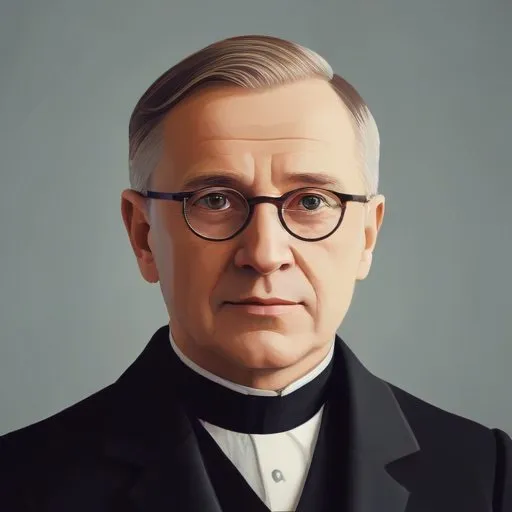
A renowned Estonian composer and educator, known for his contributions to the country's musical landscape, particularly in the development of Estonian opera and choral music.
Eino Tamberg, a renowned Estonian composer, left an indelible mark on the world of classical music with his neoclassical masterpieces, operas, and symphonies that continue to enthrall audiences globally. His opus, characterized by a unique blend of elegance and expressiveness, has earned him a prestigious place in the pantheon of Estonian music.
Born on May 27, 1930, in Tallinn, Estonia, Tamberg embarked on his musical journey under the guidance of Eugen Kapp at the Tallinn Conservatory. He graduated in 1953, equipped with the skills to navigate the complex realm of music composition.
Tamberg's breakthrough came in 1955 with his song cycle, Viis romanssi Sándor Petőfi luulele, which showcased his virtuosity in setting poetry to music. This was followed by his iconic Concerto Grosso in 1956, which earned him a gold medal at an international music festival in Moscow, catapulting him to fame.
Tamberg was a key figure in the anti-romantic movement of the late 1950s, which sought to revolutionize Estonian music by introducing a more modern and experimental approach. His compositions during this period reflected a departure from the traditional romantic style, embracing a more avant-garde and expressive language.
From 1969, Tamberg dedicated himself to teaching the next generation of Estonian composers at the Estonian Academy of Music. He mentored numerous talented students, including Raimo Kangro, Margo Kärner, and Toivo Tulev, instilling in them the skills and passion required to excel in the world of music.
Tamberg's oeuvre is marked by its diversity, with works spanning opera, symphony, and concerto genres. Two of his most celebrated pieces are the ballet Joanna tentata (1971) and the Trumpet Concerto No. 1 (1972), which remains one of his most popular and widely performed works.
Tamberg's life was punctuated by significant milestones, including his appointment as music director at the Tallinn Drama Theatre (1952) and his work as a sound engineer for Estonian Radio (1953-1957).
Eino Tamberg's contributions to Estonian music are immeasurable. He not only expanded the boundaries of neoclassicism but also inspired a new generation of composers to experiment and innovate. His music continues to captivate audiences worldwide, ensuring his legacy as one of the most important Estonian composers of the 20th century.
Eino Tamberg passed away on December 24, 2010, leaving behind a rich cultural heritage that continues to enrich the lives of music lovers everywhere.
Born in 1884
Estonian-Swedish composer and conductor renowned for blending folk melodies with modernist techniques, creating a unique sound that reflected his cultural heritage. His works include symphonies, operas, and choral pieces.
