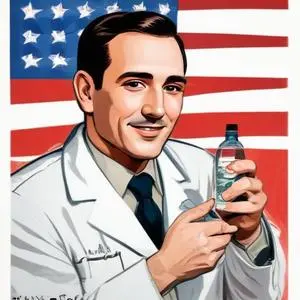
Eli Lilly

Eli Lilly

Eli Lilly was born on July 8th, 1838

Full Name: Eli Lilly
Birthplace: Baltimore, Maryland, USA
Occupation: Soldier, Chemist, and Businessman
Nationality: American
Birth Year: 1838
Death Year: 1898
Notable Work: Founded Eli Lilly and Company
Company: Eli Lilly and Company

Founded a pharmaceutical company that developed innovative medicines, including the first commercial insulin product, revolutionizing diabetes treatment. Known for pioneering pharmaceutical manufacturing and quality control standards.

Written by: Jack Thompson Jack Thompson

Eli Lilly: The Pharmaceutical Pioneer

Eli Lilly is renowned for founding the Eli Lilly and Company pharmaceutical corporation, which revolutionized the industry with its innovative manufacturing processes and commitment to quality assurance. As a soldier, pharmacist, chemist, and businessman, Lilly's contributions paved the way for the modern pharmaceutical industry.

Early Life and Military Service

Born on July 8, 1838, Lilly enlisted in the Union Army during the American Civil War, recruiting a company of men to serve with him in the 18th Independent Battery Indiana Light Artillery. He was later promoted to major and then colonel, commanding the 9th Regiment Indiana Cavalry. Lilly was captured in September 1864 and held as a prisoner of war until January 1865.

The Birth of Eli Lilly and Company

After the war, Lilly attempted to run a plantation in Mississippi, but it failed, and he returned to his pharmacy profession after the death of his first wife. Remarrying, he worked with business partners in several pharmacies in Indiana and Illinois before opening his own business in 1876 in Indianapolis. Lilly's company manufactured drugs and marketed them on a wholesale basis to pharmacies, pioneering the use of gelatin capsules to contain medicines and developing fruit flavorings.

Innovations and Philanthropy

Legacy and Impact

Eli Lilly's legacy extends beyond his company's success. He played a pivotal role in shaping the pharmaceutical industry, emphasizing the importance of research, quality control, and innovation. His philanthropic efforts continue to inspire generations, with the Eli Lilly and Company remaining a testament to his vision and dedication.

Personal Milestones and Key Life Events

Quotes and Memorable Sayings

"The highest reward for a person's toil is not what they get for it, but what they become by it."

Through his life and legacy, Eli Lilly has left an indelible mark on the pharmaceutical industry, inspiring generations to come.

Timeline
1838
Birth of Eli
Eli Lilly, American soldier, chemist, and businessman, was born on July 8, 1838, in Baltimore, Maryland.
1861
Serves in Civil War
Lilly serves in the American Civil War, fighting for the Union.
1876
Founds Eli Lilly and Company
Lilly founds Eli Lilly and Company, a pharmaceutical company that would go on to become a global giant.
1898
Death of Eli
Eli Lilly dies on June 6, 1898, in Indianapolis, Indiana, leaving behind a legacy of innovation in the pharmaceutical industry.
1913
Company Goes Public
Eli Lilly and Company goes public, with the companys shares listed on the stock exchange.
Eli Lilly

Eli Lilly Quiz

Eli Lilly's pharmaceutical company was a pioneer in which aspect of the industry?

Score: 0/5
FAQ
What were Eli Lillys contributions to the pharmaceutical industry?
Eli Lilly was a pioneer in the pharmaceutical industry, introducing new manufacturing techniques and developing innovative medicines. He founded Eli Lilly and Company, which became a leading producer of high-quality pharmaceuticals. Lillys company was known for its emphasis on research and development, and it introduced many new products, including insulin and penicillin.
How did Eli Lillys military experience influence his business career?
Eli Lillys military experience during the American Civil War had a significant impact on his business career. He was exposed to the importance of quality control and efficient manufacturing, which he later applied to his pharmaceutical company. Lillys military experience also taught him discipline, leadership, and strategic thinking, which were essential skills for his success in business.
What was Eli Lillys role in the development of insulin?
Eli Lilly played a crucial role in the development of insulin. In 1921, his company, Eli Lilly and Company, collaborated with the University of Toronto to produce insulin, making it widely available to diabetics. Lillys company developed a method for large-scale production of insulin, making it possible to manufacture the medication on a commercial scale.
How did Eli Lillys company contribute to the war effort during World War I?
During World War I, Eli Lilly and Company played a significant role in the war effort by producing pharmaceuticals and medical supplies for the military. The company developed new products, such as gas gangrene antitoxin, and increased production to meet the demand for war-related medical supplies.
What legacy did Eli Lilly leave behind?
Eli Lilly left behind a legacy of innovation, quality, and community involvement. He was a pioneer in the pharmaceutical industry, and his company continues to be a leader in the field. Lilly was also a philanthropist, supporting various causes, including education and healthcare. His legacy inspires future generations of entrepreneurs, scientists, and community leaders.

Related People:

John D. Rockefeller

Born in 1839

Founded the Standard Oil Company, revolutionizing the oil industry and amassing vast wealth, which he later used for philanthropic efforts. He's remembered for his business acumen and generosity.

Andrew Carnegie

Born in 1835

A self-made industrialist who amassed a vast fortune in the steel industry, then donated most of it to fund over 2,500 public libraries and other philanthropic endeavors.

Cornelius Vanderbilt

Born in 1794

Built railroad empires, revolutionizing transportation and commerce, and donated extensively to education and the arts.

J. P. Morgan

Born in 1837

Founded a powerful banking dynasty and dominated corporate finance, shaping the American economy through strategic investments and mergers.

Henry Ford

Born in 1863

Founded the pioneering automobile manufacturing company that revolutionized the industry with the assembly line production method, making cars more affordable and accessible to the masses.

John Jacob Astor

Born in 1763

A German-American mogul who built a fur trading empire and invested in real estate, amassing a vast fortune, which he later used to support the arts and education.

Cyrus McCormick

Born in 1809

Co-founder of International Harvester, a pioneering manufacturer of agricultural machinery, revolutionizing farming with the mechanical reaper, increasing food production and transforming the industry.