


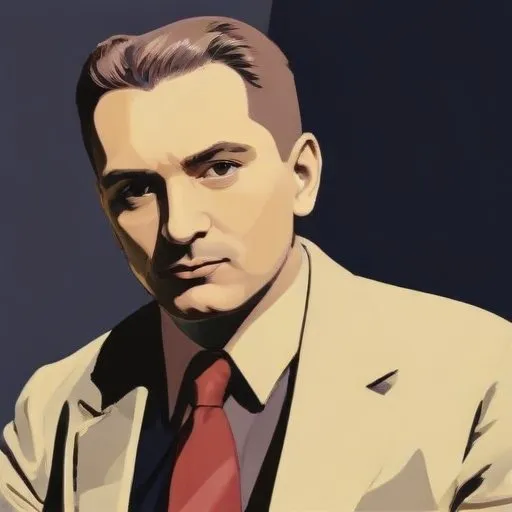
A Polish painter and art critic who wrote influential reviews and promoted modern art in Warsaw during the early 20th century, shaping the country's art scene.
Eligiusz Niewiadomski is infamous for assassinating Gabriel Narutowicz, Poland's first president, in 1922, just a week after Narutowicz took office. However, before this notorious act, Niewiadomski was a talented modernist painter and art critic who sympathized with the right-wing National Democracy movement.
Niewiadomski was born on December 1, 1869, into a family of gentry descent. His father, Wincenty Niewiadomski, was a veteran of the January Uprising and worked at the Warsaw mint. After his mother, Julia, passed away when he was just two years old, Niewiadomski was raised by his elder sister, Cecylia.
He graduated from a local trade school in 1888 and moved to St. Petersburg, where he continued his studies at the Imperial Academy of Arts. He graduated in 1894 with honors and won a scholarship to the École Supérieure des Beaux-Arts in Paris.
After returning to Warsaw, Niewiadomski became a student of Wojciech Gerson, one of Poland's most renowned artists. He also taught drawing at the Warsaw Polytechnic and collaborated with various Warsaw-based magazines and newspapers as a journalist and art critic. This gave him considerable notoriety among the artistic community.
Niewiadomski was involved in several artistic movements, including the rediscovery of the Tatra Mountains, which inspired many Polish painters, poets, and writers. He prepared and published a map of the Tatras, one of the first tourist maps of the area. He also prepared a set of historical maps of Poland, "Album of the History of Poland" (1899).
Niewiadomski was a strong supporter of nationalism, particularly the National League. His political beliefs ultimately led him to assassinate President Narutowicz on December 16, 1922, at the Zachęta art gallery in Warsaw. Narutowicz's election was seen as a threat to the right-wing National Democracy movement, and Niewiadomski believed that his actions would save Poland from "Jewish and Masonic influences."
Niewiadomski was arrested, tried, and executed by firing squad on January 31, 1923, for his crime.
Eligiusz Niewiadomski's legacy is complex and multifaceted. While he is primarily remembered for his notorious act of assassination, he was also a talented artist and art critic who contributed to the development of Polish modernist art. His involvement in the National Democracy movement reflects the tumultuous political climate of Poland during the early 20th century.
Niewiadomski's story serves as a reminder of the dangers of extremism and the devastating consequences of political violence. Despite his controversial legacy, Niewiadomski remains an important figure in Polish history, representing both the country's artistic and cultural achievements and its darker political undercurrents.
Born in 1838
A Polish painter celebrated for his vivid, detailed depictions of pivotal moments in Polish history, particularly the Battle of Grunwald. His works are considered national treasures.
