


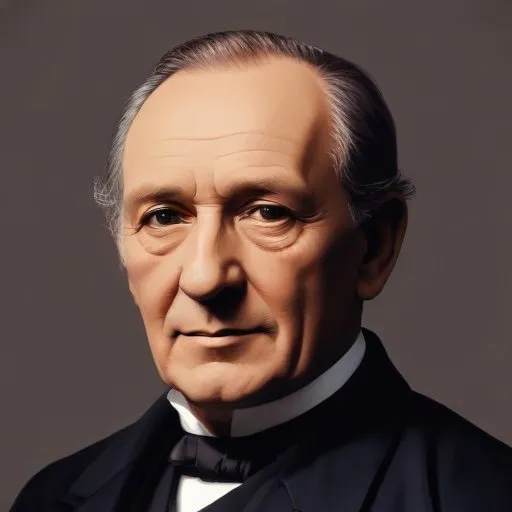
Developed groundbreaking inventions and innovations in electrical engineering, including the first practical welding machine and the first electric streetcar system.
Elihu Thomson, an American engineer and inventor, was instrumental in shaping the electrical landscape of the United States, United Kingdom, and France. He is renowned for founding major electrical companies, holds numerous patents, and made significant contributions to the field of electrical engineering.
Born on March 29, 1853, in Manchester, England, Thomson's family relocated to Philadelphia, United States, in 1858. He attended Central High School in Philadelphia and graduated in 1870. Thomson took a teaching position at Central, and by the age of 23, he held the chair of Chemistry.
In 1880, Thomson left Central High School to pursue research in electrical engineering, a rapidly expanding field at the time. Alongside Edwin J. Houston, a former teacher and colleague, Thomson founded the Thomson-Houston Electric Company. This partnership led to the creation of groundbreaking inventions, including:
In 1892, the Thomson-Houston Electric Company merged with the Edison General Electric Company to form the General Electric Company. This union marked a significant milestone in Thomson's career, solidifying his position as a pioneer in the electrical industry.
Thomson received numerous awards and honors for his contributions to electrical engineering, including the prestigious Elliott Cresson Medal in 1889. His work also earned him a place in the National Inventors Hall of Fame in 1975.
Thomson's legacy extends beyond his inventions and companies. He played a crucial role in shaping the electric light and power industry, paving the way for future innovators. His emphasis on models and singular focus on research led to a staggering 21 patent applications annually between 1880 and 1885, and 42 between 1885 and 1890.
Thomson's personal life was marked by significant milestones, including his marriage to Mary R. Otis in 1884. The couple had four children, and Thomson's dedication to his family was evident in his commitment to providing a stable life for them.
Thomson's approach to problem-solving was characterized by methodological rigor and a focus on practical applications. He believed in the importance of experimentation and iteration, often referring to his workshop as a "model room" rather than a laboratory.
Thomson's work took place during a time of rapid industrialization and technological advancement. His contributions to electrical engineering not only transformed the industry but also left a lasting impact on modern society. Today, his name is commemorated by the British Thomson-Houston Company (BTH), the French companies Thomson SA (now Technicolor SA), and Alstom (formerly Alsthom).
Elihu Thomson's remarkable life and achievements serve as a testament to the power of innovation, perseverance, and dedication. His legacy continues to inspire future generations of engineers, inventors, and entrepreneurs.
Born in 1847
A pioneer in innovation, credited with developing groundbreaking inventions that revolutionized the way people live and communicate, including the light bulb and phonograph.
Born in 1846
Developed innovative braking systems for trains, revolutionizing rail safety and transforming the industry. Founded a company that dominated the market for over a century.
Born in 1856
A pioneering engineer who harnessed the power of alternating current (AC) to transform the world's electrical systems, and is credited with developing groundbreaking technologies like radio communication and X-ray imaging.
Born in 1847
A Scottish-American engineer and academic credited with inventing the telephone, revolutionizing real-time communication. This innovation transformed the way people connect and conduct business.
