


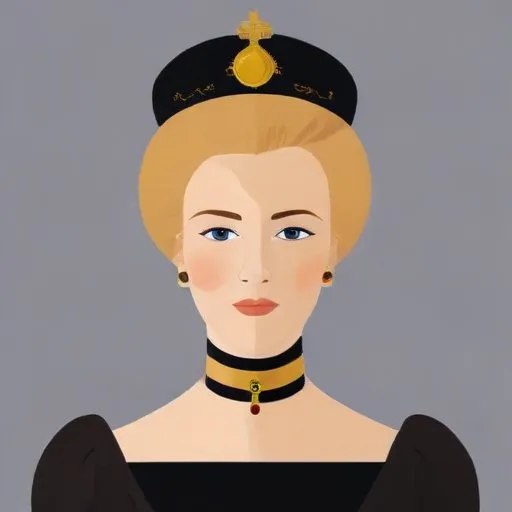
A 16th-century German noblewoman who played a significant role in the Reformation and was a patron of the arts, known for her strong will and cultural achievements.
Elisabeth of Brandenburg, Duchess of Brunswick-Calenberg-Göttingen, is renowned for her pivotal role in shaping the Reformation movement in South Lower Saxony during the 16th century. As a devoted advocate of Protestantism, she worked closely with the Hessian reformer Anton Corvinus to establish the Reformation in the region, earning her the esteemed title of a Reformation Princess.
Born on August 24, 1510, in Cölln, Elisabeth was the third child and second daughter of Elector Joachim I of Brandenburg and his wife Elisabeth, daughter of King John I of Denmark. She received a strict yet humanist education, which laid the foundation for her future endeavors in the Reformation movement.
In 1525, at the tender age of 15, Elisabeth married the 40-year-old widower Duke Eric I the Elder of Brunswick-Calenberg-Göttingen. It was during this period that she first encountered the Reformation, particularly in 1527 when her mother, the Electress, openly accepted Martin Luther's teachings by celebrating communion under both kinds at the Brandenburg court. This event greatly influenced Elisabeth's sympathies towards the Protestant faith.
After her husband's death in 1540, Elisabeth assumed the regency of the Duchy of Brunswick-Calenberg-Göttingen on behalf of her son, Eric II. During this period, she collaborated with Anton Corvinus to propagate the Reformation in the region. Together, they introduced Protestantism to the Duchy, establishing it as a dominant force in the region.
Despite the significant age difference, Elisabeth's marriage to Eric I was relatively harmonious, with the couple maintaining separate residences. However, the marriage was not without controversy, as Elisabeth accused her husband's mistress, Anna von Rumschottel, of witchcraft during her second pregnancy in 1528.
Elisabeth's tireless efforts in promoting the Reformation in South Lower Saxony earned her a lasting legacy as a champion of Protestantism. Her collaboration with Anton Corvinus not only shaped the region's religious landscape but also contributed to the broader Reformation movement in Europe.
As a Reformation Princess, Elisabeth's philosophical contributions were deeply rooted in her Protestant beliefs. She advocated for the principles of Martin Luther, emphasizing the importance of individual faith and the authority of Scripture. Her commitment to these ideals played a vital role in shaping the region's religious identity.
Elisabeth's life and work intersected with the tumultuous landscape of 16th-century Europe, where the Reformation movement was gaining momentum. Her regency and Reformation efforts not only shaped the Duchy of Brunswick-Calenberg-Göttingen but also contributed to the broader Protestant movement in Europe.
Born in 1821
Founded the Young Men's Christian Association (YMCA), a global organization providing community programs, education, and advocacy for young people. Known for promoting social responsibility and community development.
Born in 1452
The King of Naples who ruled from 1496 to 1501, known for his brief but tumultuous reign marked by conflicts with France and the Pope. He was eventually deposed and exiled.
Born in 1452
The King of Naples who ruled from 1496 to 1501, known for his brief but tumultuous reign marked by conflicts with France and the Pope. He was eventually deposed and exiled.
Born in 1666
A German princess who was imprisoned in a castle for over 30 years after being accused of infidelity, and her tragic life inspired numerous literary and artistic works.
