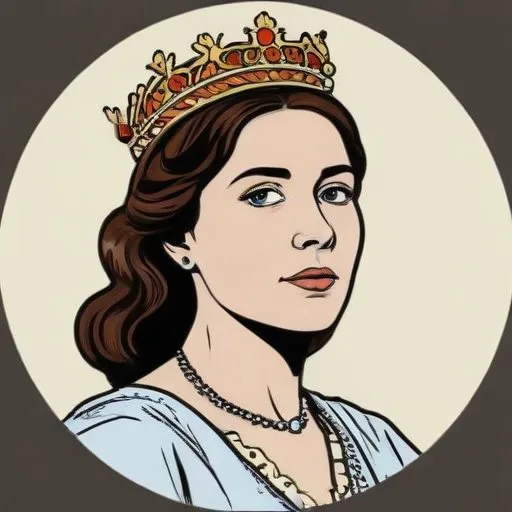
Elisabeth of Romania: A Life of Royal Duty and Controversy
Early Life and Royal Upbringing
Elisabeth of Romania, also known as Elisabeth Charlotte Josephine Alexandra Victoria, was born on October 12, 1894, to King Ferdinand I and Queen
Marie of Romania. As the second child and eldest daughter of the royal couple, Elisabeth was destined for a life of royal duty and service.
Raised by her great-uncle and great-aunt, King Carol I and Queen Elisabeth, Elisabeth was an introverted and socially isolated child. Despite this, she was well-educated and prepared for her future role as a member of the royal family.
Queen of Greece and Humanitarian Efforts
In 1921, Elisabeth married King
George II of Greece, becoming the Crown Princess of Greece. When her husband succeeded to the throne in 1922, Elisabeth was involved in assisting refugees who arrived in Athens after the Greco-Turkish War. Her humanitarian efforts during this time earned her recognition and respect.
However, the rise of the revolutionary climate in Greece affected Elisabeth's health, and she left the kingdom with her husband in December 1923. The royal couple then settled in Bucharest, Romania, where George was deposed on March 25, 1924, upon the abolition of the Greek monarchy.
Personal Life and Relationships
Elisabeth's marriage to King George II was marked by a lack of passion and eventually deteriorated. The couple divorced in 1935, and Elisabeth went on to amass a significant fortune, partly due to financial advice from her lover, the banker Alexandru Scanavi.
Elisabeth was very close to her brother, Carol II of Romania, and played an important role in his life and reign. After the death of her mother in 1938 and the abdication of King Carol II in 1940, Elisabeth took on the role of First Lady of Romania.
Controversy and Exile
At the end of World War II, Elisabeth established close links with the Romanian Communist Party and openly conspired against her nephew, the young King Michael I. This earned her the nickname "Red Aunt" of the sovereign.
However, her communist links did not prevent her from being expelled from the country when the Romanian People's Republic was proclaimed in 1947. Elisabeth moved to Switzerland and later to Cannes, where she lived out the rest of her life in relative obscurity.
Legacy and Impact
Elisabeth of Romania's life was marked by controversy and turmoil, but she also made significant contributions to her adopted country, Greece, and her native country, Romania. Her humanitarian efforts and dedication to her royal duties are a testament to her strength and character.
Despite her complex and often tumultuous life, Elisabeth remains an important figure in Romanian and Greek history, a reminder of the complexities and challenges of royal life in the 20th century.
- Notable Dates:
- October 12, 1894: Born in Romania
- 1921: Married King George II of Greece
- 1922: Became Queen of Greece
- 1923: Left Greece and settled in Bucharest, Romania
- 1924: King George II deposed
- 1935: Divorced King George II
- 1938: Mother, Queen Marie, died
- 1940: Brother, King Carol II, abdicated
- 1947: Expelled from Romania
- November 14, 1956: Died in Cannes, France
FAQ
What was Elisabeth of Romanias role in the Greek royal family?
Elisabeth of Romania was the queen consort of Greece, married to King George II of Greece, and played an important role in supporting her husband during his reign.
How did Elisabeth of Romanias background influence her marriage to King George II?
As a member of the Romanian royal family, Elisabeth of Romania brought a strong sense of duty and loyalty to her marriage to King George II, which shaped her role as queen consort.
What was Elisabeth of Romanias relationship like with her husband King George II?
Elisabeth of Romania and King George II had a close and supportive relationship, with Elisabeth playing an important role in advising and supporting her husband during his reign.
How did Elisabeth of Romanias queenship impact Greek society?
As queen consort, Elisabeth of Romania was involved in various charitable and cultural activities, which helped to promote Greek culture and support the welfare of the Greek people.
What is Elisabeth of Romanias legacy in Greek history?
Elisabeth of Romanias legacy in Greek history is that of a devoted and supportive queen consort, who played an important role in supporting her husband and promoting Greek culture and society during a time of great change and upheaval.