


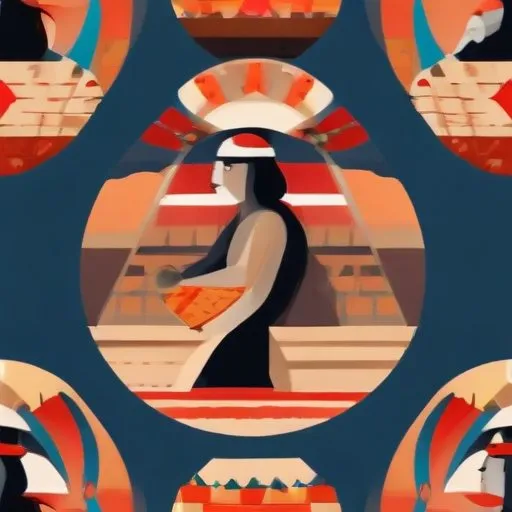
A renowned Pomo basket weaver, celebrated for her exquisite, traditional baskets that blend functionality with artistic beauty, preserving Native American cultural heritage.
Elsie Allen was a highly acclaimed Native American Pomo basket weaver, celebrated for her exquisite craftsmanship and dedication to preserving traditional Pomo basketry techniques. As a cultural preservationist, she played a vital role in categorizing and teaching Californian Indian basket patterns, ensuring the continuation of this ancient art form.
Elsie Comanche Allen was born on September 22, 1899, near Santa Rosa, California, to George and Annie Comanche, who worked as wage laborers on non-Native American farms. After her father's passing when she was just eight years old, her mother remarried and moved the family to Hopland. Elsie's first language was Pomo, which she spoke until the age of 13, when she began learning English at an Indian boarding school in Covelo, California.
Elsie's remarkable talent for basket weaving was recognized early on, and she went on to become a master weaver, creating exquisite pieces that showcased the traditional Pomo style. Her dedication to preserving this art form led her to teach and share her knowledge with others, ensuring the continuation of Pomo basketry techniques for future generations. Elsie's work has been exhibited in various museums and galleries, including the de Young Museum in San Francisco and the Smithsonian Institution in Washington, D.C.
In 1919, Elsie married Arthur Allen, a northern Pomo man of mixed Pomo and English descent. The couple had four children together and lived in various Pomo communities, including Cloverdale and Pinoleville Rancherias. Elsie was an active member of several Pomo and Hintil women's clubs, where she worked to promote the rights and welfare of Native American women.
Elsie Allen's remarkable life and achievements have left an indelible mark on the world of Native American art and culture. Her tireless efforts to preserve traditional Pomo basketry techniques have ensured the continuation of this ancient art form, and her work continues to inspire and educate people of all backgrounds. Elsie's legacy serves as a testament to the power of cultural preservation and the importance of honoring and celebrating the rich cultural heritage of Native American communities.
"I want to teach the younger generations so they can carry on the tradition... I want them to know about their ancestors and the way they lived."
Elsie Allen's life and work spanned a period of significant change and upheaval for Native American communities in California. Her dedication to preserving traditional Pomo basketry techniques and promoting cultural awareness helped to counteract the erasure of Native American cultural heritage that occurred during this time. Elsie's contributions have had a lasting impact on the world of Native American art and culture, and her legacy continues to inspire and educate people today.
