


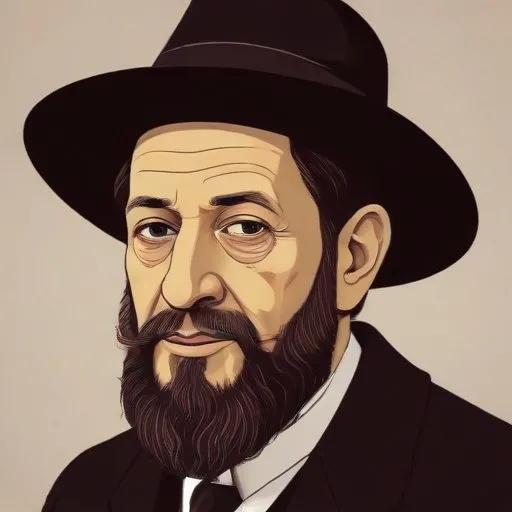
A German Jewish philosopher and Reform rabbi who explored the intersection of Jewish theology and modern philosophy, particularly in response to the Holocaust. He's known for his concept of the "614th commandment" to survive and thrive in the face of oppression.
Emil Fackenheim is renowned for his profound philosophical contributions, particularly his concept of the 614th commandment, which emphasizes the imperative for Jews to continue their existence and ensure the survival of the State of Israel in the face of the Holocaust. As a Jewish philosopher and Reform rabbi, Fackenheim's work has had a lasting impact on the Jewish community and beyond.
Born on June 22, 1916, in Halle, Germany, Fackenheim's life was marked by turmoil and resilience. He was arrested on Kristallnacht, November 9, 1938, and briefly interned at Sachsenhausen concentration camp. After a daring escape to Great Britain with his younger brother Wolfgang, he eventually made his way to Canada, where he was interned at a remote camp near Sherbrooke, Quebec.
Fackenheim's academic journey began in earnest after his release from internment. He enrolled in the graduate philosophy department of the University of Toronto, earning his PhD with a dissertation on medieval Arabic philosophy in 1945. He went on to become a professor of philosophy at the University of Toronto, a position he held from 1948 to 1984. Fackenheim was also an original editorial advisor of the scholarly journal Dionysius and received an honorary doctorate from Sir George Williams University (now Concordia University) in 1971.
Fackenheim's most influential concept, the 614th commandment, is a moral imperative for Jews to continue their existence and ensure the survival of the State of Israel. This concept is rooted in the belief that the Holocaust must be understood as a call to action, requiring Jews to carry on their heritage and traditions despite the atrocities committed against them. Fackenheim's work emphasizes the importance of Jewish existence and the need for Jews to deny Hitler a posthumous victory.
Fackenheim's philosophical contributions have had a profound impact on modern society, inspiring generations of Jews and non-Jews alike. His work serves as a testament to the resilience of the human spirit and the importance of preserving cultural heritage. In 1984, Fackenheim emigrated to Israel, where he continued to advocate for the importance of Jewish existence and the survival of the State of Israel.
"The Holocaust must be understood as an imperative requiring Jews to carry on Jewish existence and the survival of the State of Israel."
The life and work of Emil Fackenheim serve as a testament to the power of the human spirit and the importance of preserving cultural heritage in the face of adversity. His philosophical contributions continue to inspire and educate generations, ensuring that the lessons of the Holocaust are never forgotten.
Born in 1878
A philosopher who explored the nature of human relationships, dialogue, and existence, and is best known for his concept of "I-Thou" relationships, which emphasizes mutual respect and understanding.
Born in 1907
A prominent Jewish scholar who merged traditional faith with modern philosophy, advocating for social justice and interfaith dialogue through his influential writings and activism.
Born in 1903
A prominent Talmudic scholar and philosopher who merged traditional Jewish thought with modern Western philosophy, creating a unique synthesis of faith and reason.
98 Years Old
A Romanian-American writer, professor, and humanitarian who survived the Holocaust and dedicated his life to promoting peace, justice, and human rights, leaving a lasting impact on literature and activism.
Born in 1906
A 20th-century philosopher and theorist who explored the nature of power, politics, and humanity, particularly in the context of totalitarianism and the Holocaust.
Born in 1903
A critical theorist who critiqued modern society, culture, and capitalism, arguing that they perpetuate inequality and stifle individual freedom. His work influenced many fields, from sociology to musicology.
Born in 1885
A German philosopher who explored the concept of utopia and the human desire for a better world, influencing Marxist thought and critical theory.
