


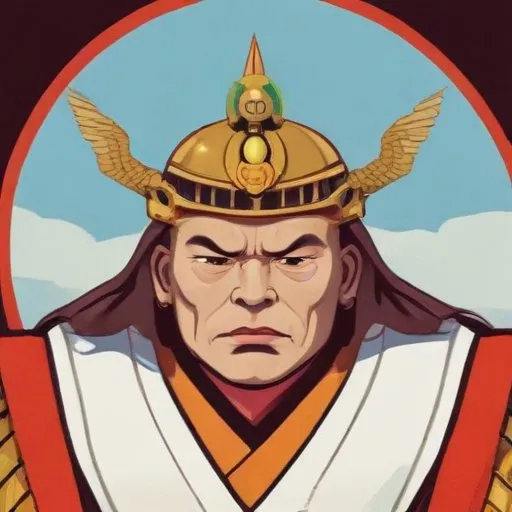
The 77th emperor of Japan, who ruled from 1155 to 1158 and later became a powerful cloistered emperor, influencing Japanese politics and culture for over 30 years. He's known for his efforts to consolidate imperial power and promote Buddhism.
Emperor GoShirakawa, also known as the Later Emperor Shirakawa, was the 77th emperor of Japan, renowned for his exceptional political prowess and remarkable influence that lasted for nearly four decades. He is remembered as the last true emperor of Japan, who skillfully navigated the complex web of imperial politics, outmaneuvering his opponents to maintain power and authority.
Born on October 18, 1127, Emperor GoShirakawa's life was marked by a series of strategic moves that enabled him to rise to power and maintain his position despite the weakening authority of the emperors during that period. He ascended to the throne in 1155, following the death of Emperor Konoe, and went on to rule Japan for nearly three years, although his de facto reign spanned almost thirty-seven years.
Emperor GoShirakawa's success in maintaining power can be attributed to his mastery of the insei system, a political framework that allowed retired emperors to wield significant influence over the government. Through his clever use of alliances and strategic maneuvers, he was able to outmaneuver his opponents, including the powerful Fujiwara clan, to secure his position and shape the course of Japanese politics.
Emperor GoShirakawa's legacy extends far beyond his impressive political career. He is remembered as the last true emperor of Japan, who skillfully maintained power and authority in a rapidly changing political landscape. His mastery of the insei system and his ability to adapt to changing circumstances have inspired generations of politicians and strategists.
In conclusion, Emperor GoShirakawa's remarkable life and career serve as a testament to the importance of strategic thinking, adaptability, and innovation in politics. His legacy continues to inspire and influence Japanese politics to this day, making him one of the most enduring and fascinating figures in Japanese history.
Born in 1143
The 72nd emperor of Japan, ruling from 1165 to 1169, known for his brief but tumultuous reign marked by power struggles and conflicts with the samurai class. He's a relatively minor figure in Japanese history.
Born in 1249
The 90th emperor of Japan, who reigned from 1259 to 1274, is most known for his efforts to reform the imperial court and restore its power during the Kamakura period. He's also famous for his love of poetry and literature.
Born in 1220
The 127th emperor of Japan, who ruled from 1242 to 1246, is known for his brief reign and his role in the Imperial Court's struggles for power during the Kamakura period. He's also remembered for his poetry and patronage of the arts.
Born in 1053
A Japanese emperor who ruled from 1073 to 1087 and is known for his abdication and establishment of the Insei system, where retired emperors held significant power behind the scenes.
Born in 1103
A 12th-century Japanese emperor who ruled from 1107 to 1123 and is famous for his abdication and subsequent influence on the imperial court from behind the scenes. He's also known for his patronage of Buddhism and the arts.
Born in 1119
The 12th-century Japanese emperor who reigned from 1123 to 1142 and is famously known for his role in the Hogen Rebellion, a significant event in Japanese history that marked the beginning of the end of imperial power. He's also remembered for his strong personality and conflicts with the Fujiwara regents.
