


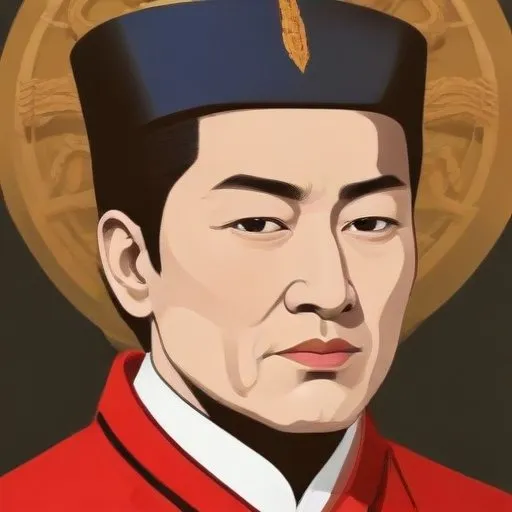
Ruling China from 1162 to 1189, this emperor oversaw a golden age of cultural and economic prosperity, marked by significant advancements in literature, art, and trade. He's also remembered for his military campaigns against the Jin dynasty.
Remembered as one of the most effective rulers in the Song dynasty, Emperor Xiaozong, also known as Zhao Shen, took the throne in 1162 and brought about a period of unprecedented prosperity to China. He is revered for his wise leadership, which marked the beginning of the Golden Age of the Southern Song dynasty.
Zhao Shen was born on November 27, 1127, as Zhao Bocong, a seventh-generation descendant of Emperor Taizu, the founder of the Song dynasty. His name was later changed to Zhao Yuan, and then to Zhao Wei after he was adopted by Emperor Gaozong in 1160. Finally, he took the name Zhao Shen when he became crown prince in 1162.
As the adoptive son of Emperor Gaozong, Zhao Shen was groomed to take the throne, and he finally ascended to power in 1162. However, Emperor Gaozong remained the de facto ruler until his death in 1187, when Zhao Shen finally took full control of the empire.
During Emperor Xiaozong's reign, the Song dynasty experienced a period of unprecedented growth and prosperity. The economy flourished, and the empire saw significant advancements in technology, literature, and art. The capital city, Hangzhou, became a hub of cultural and economic activity, earning the nickname "the most magnificent city in the world."
The emperor's wise leadership and policies encouraged trade, agriculture, and industry, leading to a significant increase in the empire's wealth and population. He also invested heavily in education, establishing numerous schools and academies, which helped to promote Confucianism and spread knowledge throughout the empire.
In 1187, Emperor Xiaozong abdicated in favor of his third son, Zhao Dun, who became Emperor Guangzong. He took the title of Taishang Huang, or Retired Emperor, and continued to wield significant power until his death in 1194.
This abdication marked a significant milestone in Emperor Xiaozong's life, as he became the first descendant of Emperor Taizu to relinquish the throne. His decision to abdicate in favor of his son was seen as a wise and selfless move, further cementing his legacy as a benevolent and effective ruler.
Emperor Xiaozong's reign is remembered as a golden age of prosperity and growth in the Song dynasty. His wise leadership, economic policies, and investments in education helped to establish a strong foundation for the empire, which continued to thrive for generations to come.
His legacy extends beyond his reign, as he set a precedent for future emperors to follow. His emphasis on education, trade, and industry helped to shape the course of Chinese history, earning him a place among the most revered rulers in Chinese history.
