


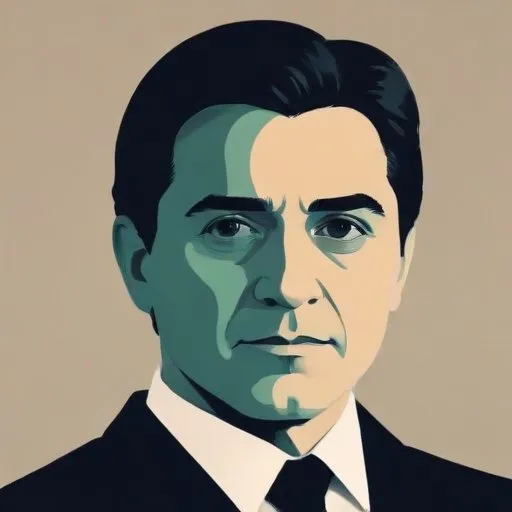
Argentinian lawyer and politician who served as President of the Argentine Senate and played a key role in the country's constitutional reform. Known for his efforts to strengthen democratic institutions and promote human rights.
Enrique Mosca was a prominent Argentine lawyer and politician, best known for his instrumental role in advancing democratic elections and reforms in the country, particularly through his affiliation with the centrist Radical Civic Union (UCR). As a champion of democratic values, Mosca's contributions had a profound impact on Argentine politics and society, earning him recognition as a key figure in the country's modern history.
Mosca was born on July 15, 1880, in Santa Fe, Argentina. He received his early education at the Jesuit College of the Immaculate Conception and later pursued a degree in law at the University of the Province of Santa Fe (now the National University of the Littoral). Mosca graduated with a juris doctor in 1906, marking the beginning of his illustrious career in law and politics.
Mosca's affiliation with the UCR began during his university days, and he soon became an influential figure in the party. As the editor-in-chief of La Argentina, a leading newspaper in Santa Fe, Mosca played a crucial role in promoting the UCR's push for democratic elections. His efforts contributed significantly to the passage of the Sáenz Peña Law in 1912, which introduced secret and compulsory voting, paving the way for the election of Hipólito Yrigoyen as president in 1916.
Mosca's political career flourished in the 1920s, with his election to Congress in 1916 and later as governor of Santa Fe Province in 1920. During his tenure as governor, Mosca introduced several reforms, including the abolition of annual fees for public primary school students and the establishment of the Provincial Library and Archives. He also vetoed a proposal to replace the provincial constitution, demonstrating his commitment to pragmatic governance.
In 1924, Mosca was appointed Federal Interventor of Mendoza Province, and later joined the Antipersonalist UCR, a faction opposed to Yrigoyen. Despite their differences, Mosca remained a vocal critic of Yrigoyen's overthrow in 1930, demonstrating his unwavering commitment to democratic principles.
Enrique Mosca's contributions to Argentine politics and society are undeniable. His tireless efforts to promote democratic values, education, and social reform have left a lasting impact on the country. As a champion of democracy, Mosca's legacy serves as a testament to the power of civic engagement and the importance of upholding democratic principles.
Throughout his life, Mosca demonstrated an unwavering commitment to democratic values, education, and social reform. His legacy serves as a testament to the power of civic engagement and the importance of upholding democratic principles, earning him a revered place in Argentine history.
Born in 1852
The 19th President of Argentina, a key figure in the country's Radical Civic Union, known for his populist policies and efforts to reduce inequality. He's remembered for his strong leadership during a time of great social change.
Born in 1868
The 20th President of Argentina, a lawyer and politician who served from 1922 to 1928, known for his efforts to modernize and democratize the country. He's also remembered for his role in establishing the country's Supreme Court.
Born in 1797
A Peruvian military leader and politician who served as President of Peru, known for his role in the country's independence and modernization efforts. He implemented significant reforms, including the abolition of slavery and the establishment of a new constitution.
Born in 1885
A military leader who briefly held the presidency of Argentina in 1943, known for his role in a coup that overthrew the government. He's a footnote in Argentine history, remembered for his brief, tumultuous tenure.
