


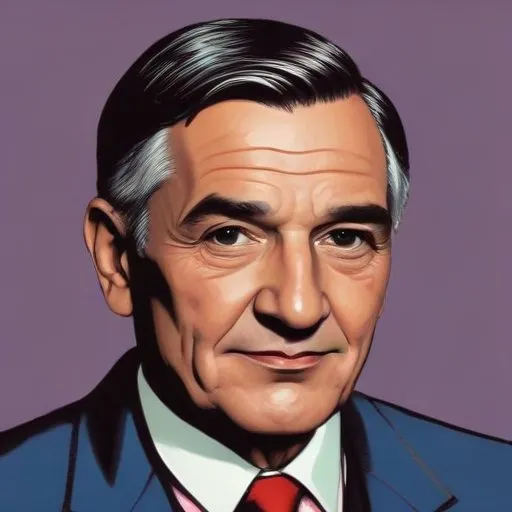
A renowned expert in Sanskrit and Indian studies, known for translating ancient Hindu and Buddhist texts into English, making them accessible to Western scholars.
Ernest Bender, a renowned Professor of Indo-Aryan languages and literature at the University of Pennsylvania, left an indelible mark on the world of philology and cultural history. Born in Buenos Aires, Argentina, on January 2, 1919, Bender's insatiable curiosity and passion for languages led him to delve into the intricacies of medieval Jainism, earning him recognition as a leading expert in the field.
Bender's fascination with languages began at a tender age. After moving to Philadelphia, Pennsylvania, at the age of four, he enrolled in the selective Greek and Latin program of Boys High School, later known as Central High School. His academic prowess earned him a spot at Temple University, where he pursued undergraduate studies in classics, solidifying his lifelong interest in philology and cultural history.
At the University of Pennsylvania, Bender came under the guidance of three influential teachers who shaped his academic trajectory: W. Norman Brown, Zellig Harris, and Henry Hoenigswald. Brown, an Indology expert, instilled in Bender a deep understanding of medieval Jainism, while Harris and Hoenigswald, both linguistics experts, honed his skills in the field.
Following the United States' declaration of war on Japan in 1941, Bender was drafted into the United States Air Force. However, due to medical reasons, he was discharged from active duty and instead focused on his academic pursuits. The American Council of Learned Societies awarded him a grant to study Hindi and Urdu at the Asia Society in New York City, further solidifying his expertise in Indo-Aryan languages.
Bender's teaching career spanned several years, during which he instructed Hindi and Urdu in the Army Specialized Training Program. He also coordinated the program in Japanese from 1944 to 1946. Concurrently, he was awarded two consecutive Harrison fellowships at Pennsylvania, enabling him to study Sanskrit. His collaboration with Harris on linguistics led to the coauthorship of two articles on the Cherokee language, demonstrating his versatility in language studies.
Bender's contributions to the field of Indo-Aryan languages and literature are immeasurable. His unpublished manuscript on Cherokee texts, complete with translations and grammatical analysis, remains a testament to his tireless efforts. Through his work, he has inspired generations of scholars, cementing his reputation as a true pioneer in the field.
Bender's achievements were recognized with the prestigious Harrison fellowship, a testament to his dedication to the field of Indology.
Bender's work was characterized by a deep respect for the cultural heritage of Indo-Aryan languages and literature. He believed in the importance of understanding the nuances of language to appreciate the richness of cultural history.
Bender's most notable work includes his unpublished manuscript on Cherokee texts, complete with translations and grammatical analysis. His coauthorship of two articles on the Cherokee language with Harris showcases his expertise in linguistics.
Bender's contributions to the field of Indo-Aryan languages and literature have far-reaching implications for understanding cultural heritage and the importance of language in shaping our perspectives. His work continues to inspire scholars and researchers, fostering a deeper appreciation for the complexities of human culture.
Bender's work on medieval Jainism and Indo-Aryan languages was contemporaneous with other notable scholars in the field. His unique approach, however, set him apart, earning him recognition as a leading authority on the subject.
Bender's life was marked by significant milestones, from his early education to his teaching career and research pursuits. His dedication to the field of Indo-Aryan languages and literature has left an indelible mark on the academic community.
Bender's work has had a profound impact on the field of Indo-Aryan languages and literature, inspiring future generations of scholars to delve deeper into the complexities of cultural heritage and language.
Bender's legacy is a testament to the power of scholarship and dedication. He leaves behind a rich cultural heritage, one that continues to inspire and enrich our understanding of the complexities of human culture.
85 Years Old
A renowned scholar of Hinduism and mythology, known for provocative and insightful interpretations of ancient Indian texts, challenging traditional views and sparking lively debates.
