


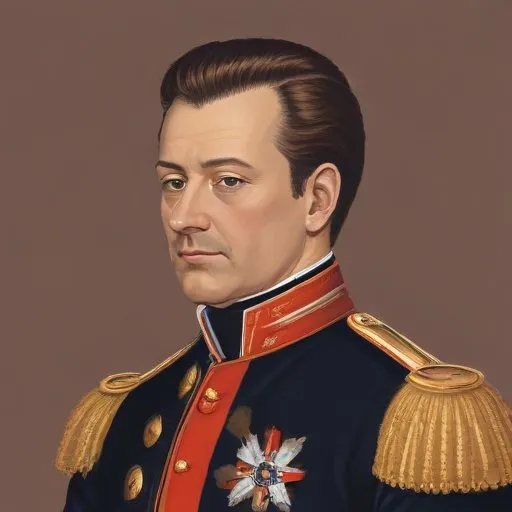
A 17th-century German nobleman who ruled Pomerania and was a patron of the arts, known for his cultural achievements and architectural projects. He rebuilt and renovated several cities and castles, leaving a lasting legacy in his region.
Ernst Ludwig, Duke of Pomerania, is renowned for his significant contributions to the development of education in Pomerania, particularly through his patronage of the University of Greifswald, where he personally oversaw the rebuilding of the medical faculty. Additionally, he is recognized for his attempts to elevate the Duchy of Pomerania's military status in the Upper Saxon Circle, although these efforts ultimately proved unsuccessful.
Ernst Ludwig was born on November 20, 1545, in Wolgast, Pomerania, to Philipp I of Pomerania-Wolgast and Maria of Saxony. He was one of ten siblings, and following the death of his father in 1560, he and his siblings were placed under the guardianship of their great-uncle, Barnim XI.
In 1563, Ernst Ludwig, along with his brother Barnim XII, attended the University of Wittenberg, where they resided in the house of Martin Luther. This exposure to Lutheran ideology would later influence his governance of Pomerania. Subsequently, he briefly lived at the court of Johann Wilhelm, Duke of Saxe-Weimar, with his brother Bogislaw XIII.
In 1569, Barnim XI retired, and the Duchy of Pomerania was internally partitioned among the male members of the House of Pomerania. Ernst Ludwig and his brother Bogislaw XIII received Pomerania-Wolgast, while their brothers Johann Friedrich and Barnim XII received Pomerania-Stettin and the bishopric of Cammin, respectively. However, Bogislaw and Barnim soon renounced their positions, leaving Ernst Ludwig to rule Pomerania-Wolgast alone.
On October 20, 1577, Ernst Ludwig married Sophia Hedwig, daughter of Julius of Brunswick-Lüneburg. The couple had three children: Hedwig Maria, Elisabeth Magdalena of Pomerania, and Philipp Julius.
Ernst Ludwig played a significant role in attempting to elevate the Duchy of Pomerania's military status in the Upper Saxon Circle, although these efforts ultimately proved unsuccessful. Despite this, his contributions to education and governance left a lasting impact on Pomerania. He died on June 17, 1592, in Wolgast, bringing an end to his 32-year reign as Duke of Pomerania-Wolgast.
Ernst Ludwig's patronage of the University of Greifswald and his involvement in the rebuilding of the medical faculty demonstrate his commitment to education and intellectual pursuits. His exposure to Lutheran ideology during his time at the University of Wittenberg likely influenced his governance of Pomerania, emphasizing the importance of education and intellectual freedom.
Ernst Ludwig's legacy as a patron of education and military reformer continues to shape our understanding of Pomerania's rich history, highlighting the significant contributions of this influential duke to the development of his region.
