


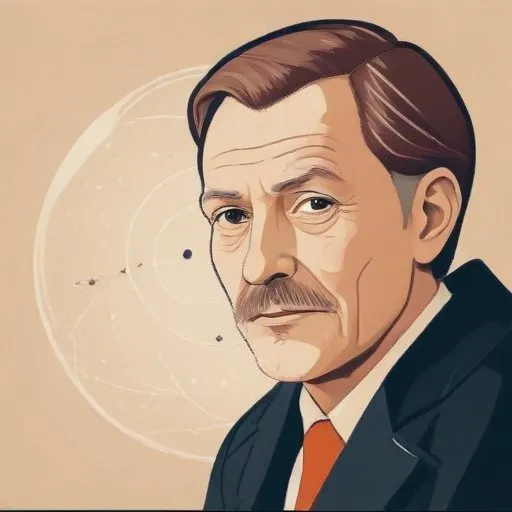
Developed theories on stellar evolution, proposing that stars are born, live, and die in a cycle, and made significant contributions to our understanding of the universe.
Ernst Öpik, a renowned Estonian astronomer and astrophysicist, left an indelible mark on the field of solar system dynamics. He is best known for his groundbreaking work on the origins of comets, which led to the discovery of the Oort Cloud, a distant, spherical shell of icy bodies surrounding our solar system.
Öpik was born on October 22, 1893, in Kunda, Kreis Wierland, Governorate of Estonia, which was then part of the Russian Empire. He pursued his higher education in astronomy at the University of Moscow, where he specialized in the study of minor bodies, such as asteroids, comets, and meteors. Öpik later completed his doctorate at the University of Tartu in 1923.
Öpik's extensive research spanned multiple areas of astronomy, including the estimation of densities of visual binary stars, determining the distance to the Andromeda Galaxy, and predicting the frequency of craters on Mars. His work was marked by innovative methods and uncanny accuracy, often predating the results of later researchers.
Öpik's contributions to astronomy have been profound and far-reaching, shaping our understanding of the solar system and beyond. His work has inspired generations of astronomers and continues to influence ongoing research.
As the first and longest-serving editor of the Irish Astronomical Journal (1950-1980), Öpik played a vital role in promoting astronomical research and disseminating knowledge within the scientific community.
Today, Öpik's legacy is a testament to his tireless pursuit of knowledge and his ability to illuminate the mysteries of the universe.
Ernst Öpik received numerous awards and honors for his outstanding contributions to astronomy, including the honorary doctorate of Queen's University Belfast (1964) and the Royal Astronomical Society of Canada's Petrie Prize Lectureship (1975).
Öpik spent the second half of his career (1948-1981) at the Armagh Observatory in Northern Ireland, where he continued to make significant contributions to astronomy. He passed away on September 10, 1985, leaving behind a rich legacy that continues to inspire and educate astronomers and enthusiasts alike.
55 Years Old
Estonian professional footballer who played as a midfielder and earned 35 caps for the Estonia national team, scoring 4 goals.
