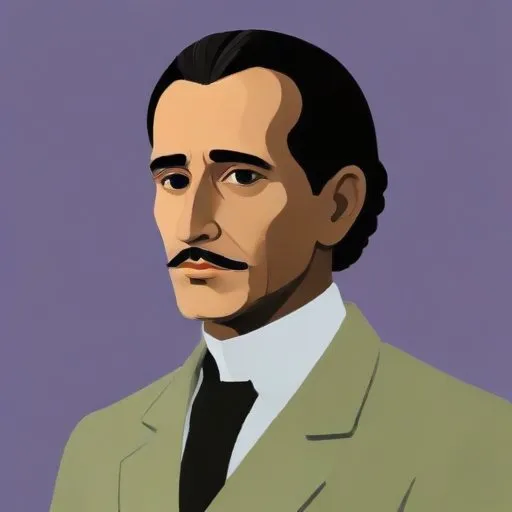
Esteban Manuel de Villegas: The Enigmatic Spanish Poet
A Poetic Soul with a Dash of Controversy
Esteban Manuel de Villegas is renowned for his lyrical masterpieces, particularly his poetic book,
Las Eróticas, which sparked both admiration and controversy in 17th-century Spain. As a poet, Villegas' words dripped with passion, wit, and satire, earning him a reputation as one of the most original and provocative writers of his time.
A Life of Contrasts: Wealth and Financial Struggles
Born on February 5, 1589, in Matute, La Rioja, Villegas came from a wealthy family. However, his own financial situation was marked by difficulties, mainly due to his large family and numerous legal disputes. Despite his struggles, Villegas remained dedicated to his craft, pouring his heart and soul into his writing.
Education and Early Career
Villegas studied grammar in Madrid before enrolling in the University of Salamanca in 1610, where he earned a degree in Law. However, he never pursued a career in law, instead focusing on his literary pursuits.
A Turbulent Relationship with the Inquisition
In 1659, Villegas faced trial by the Spanish Inquisition, accused of believing himself to possess the absolute truth. His response, "I know more about thorny questions than the Church Fathers," landed him in jail. Although he was sentenced to four years of exile, he was pardoned after a year. This tumultuous episode did not deter Villegas from expressing himself through his writing, often targeting religious communities in his satires.
Literary Legacy
Las Eróticas, Villegas' most famous work, was published in 1618 and widely reprinted in subsequent years. The book's originality and wit earned Villegas both admiration and criticism. Lope de la Vega, a contemporary writer, referenced Villegas' work in his own writing, but without mentioning his name.
Awards and Honors
Although Villegas faced his share of challenges, his literary contributions were recognized and appreciated by his peers and later generations. His work continues to inspire and influence Spanish literature to this day.
Personal Life and Later Years
At the age of 36, Villegas married Doña Antonia de Leyva Villodas, who was twenty years his junior. He passed away on September 3, 1669, in Njera, La Rioja, leaving behind a legacy of provocative and beautiful poetry.
Trivia and Fun Facts
- Villegas was known for his extravagant attire, which was often remarked upon by his contemporaries.
- His writing style was characterized by its lyricism, wit, and satire, earning him both praise and criticism.
- Villegas' poetry was often confiscated by the Inquisition, leading to the loss of many of his original works.
Conclusion
Esteban Manuel de Villegas' life was a tapestry of contrasts, woven from threads of wealth and financial struggles, literary genius and controversy, and a dash of eccentricity. Despite the challenges he faced, Villegas remained true to his art, leaving behind a legacy of poetic masterpieces that continue to inspire and provoke readers to this day.
FAQ
What are the notable works of Esteban Manuel de Villegas?
Esteban Manuel de Villegas was a prolific poet, and his notable works include La lira de Andalucía and El arte de la pintura. His poetry is characterized by its lyricism and depth, often exploring themes of love, nature, and the human condition.
What was Esteban Manuel de Villegas contribution to Spanish literature?
Esteban Manuel de Villegas made significant contributions to Spanish literature, particularly in the field of poetry. He was one of the first poets to write in the Andalusian dialect, paving the way for future generations of Spanish poets.
Where was Esteban Manuel de Villegas born?
Esteban Manuel de Villegas was born in Matute, Logroño, Spain in 1589.
What was Esteban Manuel de Villegas occupation aside from poetry?
Aside from being a renowned poet, Esteban Manuel de Villegas was also an educator, and served as a teacher and rector at various institutions in Spain.
What is Esteban Manuel de Villegas legacy in Spanish poetry?
Esteban Manuel de Villegas legacy in Spanish poetry is immense, as he is considered one of the precursors of the Spanish Baroque movement. His poetry continues to be studied and admired for its beauty and depth.