


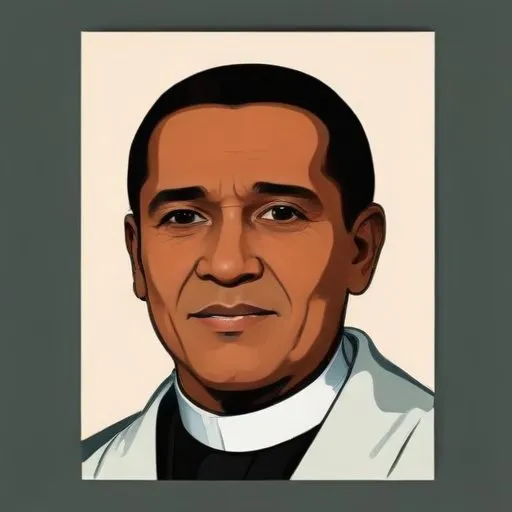
An Italian Jesuit priest who explored and mapped the southwestern United States, establishing missions and converting Native Americans to Christianity. He's also known for his cartographic skills, creating some of the earliest maps of the region.
Eusebio Kino, a 17th-century Italian Jesuit missionary, is renowned for his groundbreaking expeditions that mapped the uncharted territories of the American Southwest, debunking the long-held myth that Baja California was an island. Through his tireless efforts, he established 24 missions and visitas (country chapels or visiting stations), leaving an indelible mark on the region's history and cultural heritage.
Born in 1645 in the village of Segno, then part of the sovereign Prince-bishopric of Trent, Holy Roman Empire, Eusebio Chini (later adopting the Spanish variant "Kino") was the son of Francesco Chini and Margherita Luchi, members of the local noble families. After recovering from a serious illness, he vowed to devote himself to God, taking the second name Francesco in honor of Saint Francis Xavier.
Kino received his education at the Jesuit college in Hall, Tirol, Austria, and later underwent rigorous religious training in Freiburg, Ingolstadt, and Landsberg, Bavaria. In 1665, he joined the Society of Jesus, committing himself to a life of service, exploration, and evangelism.
In 1687, Kino arrived in Mexico City, where he began his storied career as a missionary and explorer. He soon became fascinated with the largely uncharted territories of the Pimera Alta, which encompassed modern-day Sonora, Mexico, and southern Arizona, United States. Through his expeditions, he worked closely with the indigenous Native American population, including the Tohono O'odham, Sobaipuri, and other Upper Piman groups.
Kino's cartographic accomplishments were revolutionary, as he created detailed maps of the region, correcting the prevailing misconception that Baja California was an island. In 1699, he led an overland expedition to the region, conclusively proving its peninsular nature. This discovery opened up new avenues for trade, mission work, and further exploration.
Throughout his 24-year tenure in the Pimera Alta, Kino founded 24 missions and visitas, cementing his reputation as a dedicated apostle of the Native American people. His mission at San Xavier del Bac, near present-day Tucson, Arizona, remains one of the oldest and most revered in the region.
Kino's unwavering commitment to the indigenous population and his tireless efforts to promote understanding between European colonizers and Native Americans have earned him a revered place in the annals of American Southwest history.
Eusebio Kino's remarkable life and achievements have had a profound impact on modern society, inspiring:
Today, Kino's legacy continues to inspire people around the world, serving as a testament to the power of dedication, perseverance, and cross-cultural understanding.
Born in 1506
Co-founder of the Society of Jesus, a Catholic religious order, known for his missionary work in Asia, especially in India and Japan, and for his role in the Counter-Reformation. He's revered for his tireless efforts to spread Christianity and his compassion for the poor and marginalized.
Born in 1491
Founded the Jesuit Order, a Catholic religious organization known for its missionary and educational work, and developed the Spiritual Exercises, a guide for spiritual growth and discernment.
Born in 1713
Founded the first nine missions in California, introducing Christianity to the Native Americans and shaping the state's early history.
Born in 1703
A Croatian missionary and explorer who traveled to South America in the 18th century, mapping the Amazon River and discovering new tribes. He's known for his bravery and contributions to geography.
