


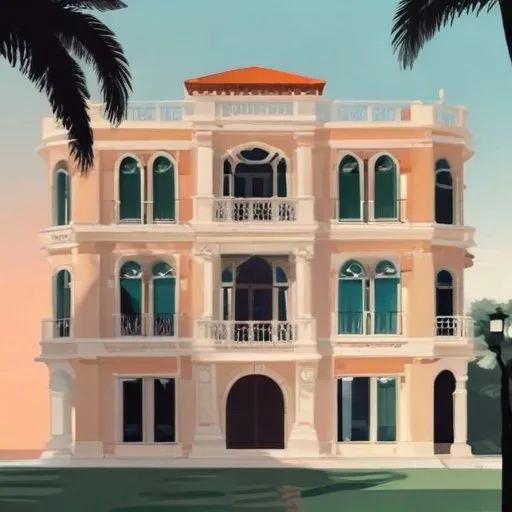
Co-designer of the iconic Villa Vizcaya, a National Historic Landmark in Miami, known for blending European and tropical styles in architecture. This masterpiece showcases their innovative and eclectic design sense.
F. Burrall Hoffman, Jr. was born on March 6, 1882, into a wealthy and influential New York family with a rich history of public service. His great-grandfather, Murray Hoffman, was a Justice of the Supreme Court of New York, and his grandfather, Wickham Hoffman, served as the United States Minister to Denmark from 1883 to 1893.
Hoffman's architectural prowess was evident from an early age. He entered Harvard College with the class of 1903 but received his degree AB in 1902. During his senior year, he apprenticed at Carrère and Hastings, a prestigious architectural firm in New York. This experience laid the foundation for his future success.
From 1903 to 1907, Hoffman attended the esteemed École des Beaux-Arts in Paris, graduating with honors. Upon his return to New York, he rejoined Carrère and Hastings, where he honed his skills alongside notable architects. In 1910, Hoffman established his own architectural firm in Manhattan, sharing office space with architect Harry Creighton Ingalls.
In 1912, Hoffman's career-defining project began when James Deering engaged him to design Villa Vizcaya, a grand Italian-style villa in Miami, Florida. Collaborating with interior designer Paul Chalfin and garden designer Diego Suarez, Hoffman created a masterpiece that would become the largest and most notable project of his sixty-year career.
Villa Vizcaya, with its stunning architecture, lush gardens, and exquisite interior design, was a testament to Hoffman's innovative and meticulous approach. Although he left the project in 1917 to enlist in the Army, his contributions to Villa Vizcaya cemented his reputation as a visionary architect.
During World War I, Hoffman served as a Captain in the Corps of Engineers and later directed camouflage operations with the Second Corps, A.E.F. He continued to serve his country during World War II, enlisting as a Lieutenant Commander in the Navy.
In 1927, Hoffman married Virginia Dolly Kimball, a member of a wealthy Virginia publishing family, in Paris. Kimball's own career as an interior decorator often intertwined with her husband's projects, resulting in a harmonious balance of aesthetics and functionality.
F. Burrall Hoffman's contributions to architectural design and his work on Villa Vizcaya continue to inspire generations of architects, designers, and artists. His meticulous attention to detail, innovative approach, and commitment to excellence have solidified his place as one of the most influential architects of the 20th century.
F. Burrall Hoffman's remarkable life, marked by his groundbreaking work on Villa Vizcaya and his military service, serves as a testament to his unwavering dedication to his craft and his country. His lasting impact on the world of architecture continues to inspire and influence generations to come.
Born in 1867
Visionary architect behind iconic, harmonious structures that blend seamlessly into their surroundings, redefining modern American architecture.
Born in 1856
Designed iconic buildings that blended functionality with ornate details, revolutionizing American architecture with his innovative "form follows function" philosophy.
Born in 1906
A renowned architect who designed iconic buildings like the IDS Center and PPG Place, blending modernist and postmodern styles to create visually striking landmarks. His work redefined urban skylines and influenced contemporary architecture.
Born in 1917
A renowned architect who designed iconic buildings that blend modernity with cultural sensitivity, leaving an indelible mark on the urban landscape.
Born in 1887
A pioneer of modern architecture, famous for designing innovative, functional, and visually striking buildings that transformed urban landscapes. His works continue to inspire architects and designers worldwide.
Born in 1910
A Finnish-American architect and furniture designer who created iconic, futuristic structures and designs that blended art and functionality, including the iconic Gateway Arch.
69 Years Old
A renowned journalist and author, known for editing The Spectator and The Daily Telegraph, and writing acclaimed biographies of Margaret Thatcher.
