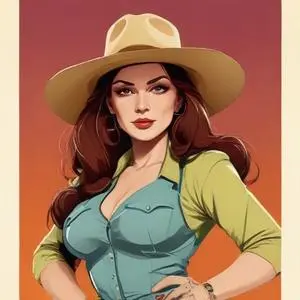
Fearless Nadia: The Daring Actress and Stuntwoman of Indian Cinema
The Original Action Heroine
Fearless Nadia, also known as Mary Ann Evans, is remembered as the pioneering actress and stuntwoman who captured the hearts of Indians with her daring stunts and fearless attitude in the 1930s and 1940s. She is most iconic for her role as the masked, cloaked adventurer in the 1935 film
Hunterwali, one of the earliest female-led Indian films.
Early Life and Career
Born on January 8, 1908, in Perth, Western Australia, Mary Ann Evans was the daughter of a Scottish father and an Australian mother. After her father's untimely death during World War I, her family moved to Peshawar (now in Pakistan), where she developed skills in horseback riding, hunting, and shooting. She later returned to Bombay (now Mumbai) with her mother and studied ballet under Madam Astrova.
The Birth of Fearless Nadia
Before entering the film industry, Evans worked as a salesgirl at the Army Navy Store in Bombay and attempted to learn shorthand and typing. However, it was her experience as a performer with Madam Astrova's troupe, which toured India and performed for British soldiers, Indian royalty, and other crowds, that laid the foundation for her fearless persona. She mastered cartwheels and splits, which later became essential skills for her film stunts.
A Glimpse into Her Film Career
Fearless Nadia was introduced to Hindi films by Jamshed J.B.H. Wadia, the founder of Wadia Movietone, in 1930. She went on to work with Wadia Movietone and other prominent film studios, starring in numerous films, including
Hunterwali,
Miss Frontier Mail, and
Jung-e-Azadi. Her daring stunts, coupled with her charming on-screen presence, made her a beloved figure in Indian cinema.
Legacy and Impact
Fearless Nadia's legacy extends beyond her film career. She inspired generations of women to pursue careers in cinema and challenge traditional gender roles. Her fearless attitude and determination paved the way for future actresses and stuntwomen in Indian cinema. Her contributions to Indian cinema have been recognized through various awards and honors, solidifying her place as a pioneering figure in Indian film history.
Personal Milestones and Key Life Events
- Fearless Nadia married Homi Wadia, the brother of Jamshed J.B.H. Wadia, in 1943.
- She was known for her philanthropic work, particularly in the area of women's empowerment.
- Fearless Nadia passed away on January 9, 1996, leaving behind a legacy that continues to inspire generations of Indians.
Trivia and Fun Facts
- Fearless Nadia's original stage name was chosen because an Armenian fortune teller predicted that a successful career lay ahead, but she would have to choose a name starting with the letter N.
- She was a skilled horseback rider and performed many of her own stunts.
- Fearless Nadia's iconic costume in Hunterwali was designed by her and has since become an iconic symbol of Indian cinema.
FAQ
What is Fearless Nadias early life and career?
Fearless Nadia was born Mary Evans in Australia in 1908. She moved to India with her family and started her career as a circus performer before venturing into films. She became a stuntwoman and actress, starring in many Hindi films.
What made Fearless Nadia a legend in Indian cinema?
Fearless Nadias fearless stunts, aerial feats, and horse-riding skills made her a legend in Indian cinema. She performed most of her stunts herself, earning her the nickname Fearless Nadia.
What kind of roles did Fearless Nadia typically play?
Fearless Nadia typically played roles that showcased her daredevil stunts, such as a masked avenger or a princess. Her films often featured a mix of action, adventure, and romance.
What is the significance of Fearless Nadias film Hunterwali?
Fearless Nadias film Hunterwali (1935) is considered a landmark in Indian cinema. It was a massive hit and established Nadia as a star. The films success can be attributed to Nadias stunts and her iconic whip-wielding character.
What was Fearless Nadias impact on Indian popular culture?
Fearless Nadias impact on Indian popular culture is immense. She inspired many women to take up careers in films and broke stereotypes about womens roles in society. She is still celebrated as a pioneering figure in Indian cinema.