


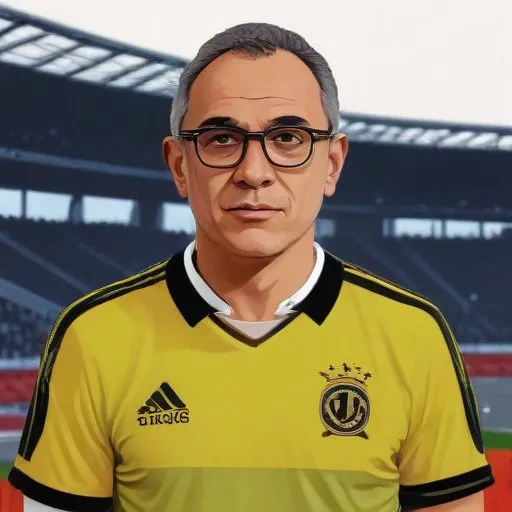
A German football legend who played for and managed top-tier clubs, earning a reputation for his intense training methods and ability to turn struggling teams around.
Felix Magath is a name synonymous with success in German football, having won numerous titles as both a player and a manager. With a reputation for demanding strong discipline and thorough training, Magath has left an indelible mark on the beautiful game.
Born on July 26, 1953, in Aschaffenburg, West Germany, Magath began his footballing journey with local club Viktoria Aschaffenburg. He soon moved to 1. FC Saarbrücken, where he spent two seasons before making the leap to Hamburger SV in 1976.
Magath's ten-year stint with Hamburg was nothing short of phenomenal, as he won three Bundesliga titles, the 1977 European Cup Winners' Cup, and the 1983 European Cup. He also scored 46 goals in 306 games in the West German top flight, earning himself a reputation as a talented, creative, and intelligent player.
Magath represented the West Germany national team at several international events, including the 1982 and 1986 FIFA World Cups, where he helped his team finish as runners-up both times. He was also part of the squad that won the 1980 UEFA European Championship, making his debut on April 30, 1977, in a 2-1 friendly win against Yugoslavia.
Throughout his international career, Magath amassed 43 caps, scoring three goals and cementing his status as one of the greatest players of his generation.
Magath's transition to management was seamless, as he went on to win multiple titles with several clubs, including two consecutive Doubles (Bundesliga and German Cup) with Bayern Munich and a Bundesliga title with VfL Wolfsburg in 2009.
In 2014, Magath made history by becoming the first German to manage in the Premier League, taking the reins at Fulham FC. His demanding style and emphasis on discipline earned him a reputation as one of the toughest managers in the game.
Magath's managerial philosophy is built on the principles of hard work, discipline, and thorough preparation. He is known for pushing his players to their limits, often using unconventional training methods to get the best out of them.
Love him or hate him, Magath's legacy in German football is undeniable. With a trophy cabinet overflowing with silverware, he has earned his place among the all-time greats of the sport.
Magath's demanding style has not been without controversy, with some players and critics accusing him of being too harsh and authoritarian. However, his supporters argue that his methods are necessary to achieve success at the highest level.
Love him or hate him, Felix Magath remains one of the most successful and influential figures in German football history. His legacy continues to inspire and divide opinions, but one thing is certain – he will always be remembered as a true legend of the sport.
81 Years Old
A German football legend who won numerous titles as a player and manager, including four Champions League trophies, and is renowned for his tactical genius and ability to motivate teams.
81 Years Old
A German football legend who won the World Cup as both a player and manager, known for his innovative style and leadership on the pitch.
71 Years Old
A German politician and businessman who served as the Minister of Food, Agriculture, and Consumer Protection from 2001 to 2005, known for his efforts to promote sustainable agriculture and animal welfare.
71 Years Old
A German football legend who played for Bayern Munich and the national team, winning numerous titles, and later became a successful club executive.
75 Years Old
A legendary German midfielder who won the 1974 World Cup and is renowned for his attacking prowess and iconic hairstyle. He's a football legend and cultural icon of the 1970s.
82 Years Old
Legendary German goalkeeper and manager, known for his incredible reflexes and shot-stopping ability, earning him the nickname "Die Katze von Anzing" (The Cat from Anzing).
65 Years Old
A German football legend who won the Ballon d'Or and led his country to World Cup victory as a player, later becoming a successful manager.
