


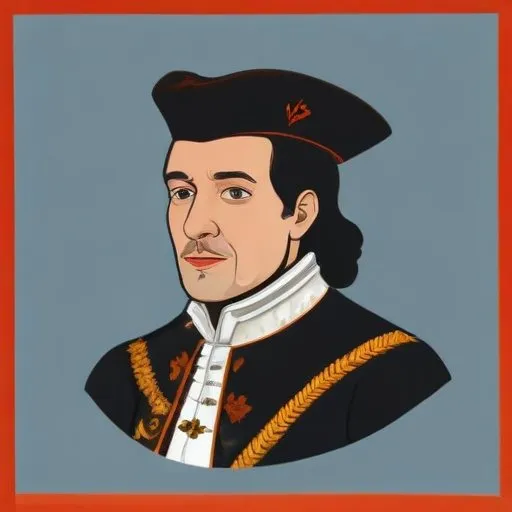
Son of King Alfonso X of Castile, he was the heir apparent to the throne, but his early death led to a succession crisis. He's known for sparking a dynastic struggle that shaped medieval Spain's history.
Ferdinand de la Cerda, the eldest son of King Alfonso X of Castile and Queen Violant of Aragon, was born on October 23, 1255, with a destiny that seemed predetermined: to inherit the throne of Castile. Yet, fate had other plans, and this would-be king's life was cut short, leaving behind a legacy of what-ifs and a dynastic crisis that would shake the foundations of medieval Spain.
Ferdinand's early life was marked by the usual pomp and circumstance of a future monarch. He was educated by the best scholars of the time, including the renowned philosopher and poet, Ramon Llull. The young infante was groomed to take over the reins of power, and his father's expectations were high. However, disaster struck when Ferdinand died suddenly on July 25, 1275, at the tender age of 19, possibly due to a combination of illness and injuries sustained during a tournament.
Ferdinand's untimely demise sparked a succession crisis that would haunt Castile for generations to come. His younger brother, Sancho IV, would eventually inherit the throne, but not before a bitter struggle for power between their mother, Queen Violant, and Sancho's supporters. This family feud would have far-reaching consequences, influencing the course of Spanish history and setting the stage for future conflicts.
Although Ferdinand de la Cerda's life was tragically short, his legacy can be seen in the dynastic conflicts that shaped medieval Spain. The power struggles that followed his death influenced the development of the Spanish monarchy, ultimately contributing to the unification of Castile and Aragon under the Catholic Monarchs. This, in turn, would have a profound impact on the course of Western history, including the Age of Exploration and the emergence of Spain as a global power.
Ferdinand de la Cerda's life must be considered within the broader context of 13th-century Europe. The reconquista, the Crusades, and the rise of nation-states were all shaping the continent during this period. The infante's story serves as a poignant reminder of the fragility of life and the unpredictability of fate, even for those destined for greatness. His legacy, though cut short, continues to fascinate historians and scholars, offering a glimpse into the intrigue and drama of medieval royal courts.
Born in 1380
Unified the Crown of Aragon, ruling over a vast territory in eastern Spain, and sponsored the voyages of Christopher Columbus, leading to the discovery of the New World.
Born in 1451
Unified the Spanish kingdoms, sponsored Christopher Columbus's voyage to the Americas, and established the Spanish Inquisition.
Born in 1405
King of Castile from 1406 to 1454, known for his struggles to maintain power and stability in a tumultuous kingdom, marked by conflicts with nobles and the rise of the Catholic Monarchs.
