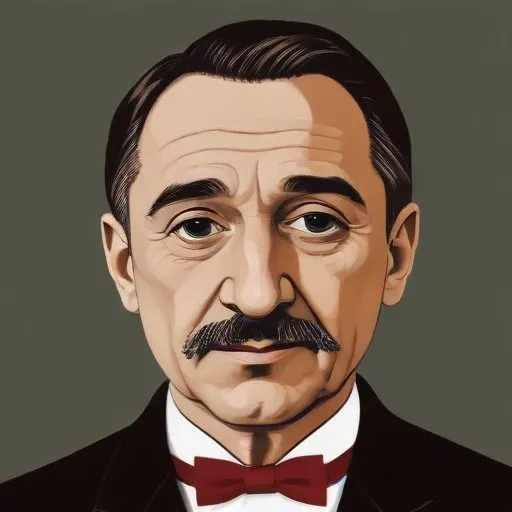
Ferenc Molnár: The Master of Whimsical Storytelling
A Hungarian Playwright of International Acclaim
Ferenc Molnár, often anglicized as Franz Molnar, is widely regarded as Hungary's most celebrated and controversial playwright. His literary masterpieces, including
The Paul Street Boys and
Liliom, have captivated audiences worldwide, earning him a reputation as a master of whimsical storytelling.
A Life of Creative Expression
Born on January 12, 1878, in Budapest, Hungary, Molnár's early life was marked by a passion for creative expression. He began writing at a young age, and his first poem was published when he was just 16 years old. This early start set the stage for a lifelong career in writing, which would take him from Hungary to the United States and eventually earn him international recognition.
A Cosmopolitan Amalgam of Styles
Molnár's writing style was a unique blend of traditional Hungarian narrative and Western influences. He drew inspiration from literary movements such as naturalism, Neo-Romanticism, Expressionism, and Freudian psychoanalytic theories, but never felt bound to any one style. This eclecticism allowed him to craft a distinctive voice that was both sophisticated and whimsical.
Novelist and Playwright: A Master of Both
While Molnár is perhaps best known for his novel
The Paul Street Boys, which has been translated into 42 languages and adapted for the stage and film, his true mastery lies in his plays. Works such as
The Devil,
Liliom,
The Swan,
The Guardsman, and
The Play's the Thing have become classics of Hungarian theater, showcasing his ability to balance naturalism and fantasy, realism and romanticism, cynicism, and sentimentality.
Influences and Legacy
Molnár's writing was influenced by luminaries such as
Oscar Wilde,
George Bernard Shaw, and
Gerhart Hauptmann. In turn, his work has inspired generations of Hungarian playwrights, cementing his place in the pantheon of Hungarian literary greats.
A Life of Perseverance: Escaping Persecution and Finding New Horizons
In 1939, Molnár fled Hungary to escape the persecution of Hungarian Jews during World War II. He eventually adopted American citizenship and continued to write, producing some of his most renowned works in exile. This period of upheaval and adaptation only served to strengthen his resolve, and his writing continued to flourish until his passing on April 1, 1952.
A Lasting Impact on Hungarian Literature
Molnár's influence on Hungarian literature cannot be overstated. His plays continue to be performed worldwide, and his novels remain beloved classics. As a cultural ambassador, he bridged the gap between Hungarian and Western literary traditions, paving the way for future generations of writers.
Philosophical Contributions and Beliefs
Molnár's writing was guided by a philosophy of entertainment and artistic expression. He believed that literature should be a reflection of life, with all its complexities and contradictions. This conviction is evident in his work, which often blurred the lines between reality and fantasy.
Personal Milestones and Key Life Events
- January 12, 1878: Born in Budapest, Hungary
- 1895: Published his first poem at the age of 16
- 1907: Published The Paul Street Boys, which became an international bestseller
- 1939: Fled Hungary to escape persecution during World War II
- 1943: Adopted American citizenship
- April 1, 1952: Passed away in New York City
Quotes and Memorable Sayings
- "I do not write for the critics or for the box office. I write for myself, for my own pleasure."
- "A writer's task is to capture the essence of life, not to moralize or preach."
Historical Context and Legacy
Molnár's life and work are a testament to the power of art to transcend borders and generations. His writing continues to captivate audiences today, offering a window into the complexities of the human experience. As a Hungarian playwright, novelist, and poet, Ferenc Molnár remains an enduring figure in the world of literature.
FAQ
What is Ferenc Molnárs most famous play?
Ferenc Molnárs most famous play is Liliom, a drama that premiered in 1909. The play tells the story of a carousel barker who dies and is sent back to Earth to relive a day from his past.
What was Ferenc Molnárs role in Hungarian literature?
Ferenc Molnár was a prominent figure in Hungarian literature, known for his innovative and expressive writing style. He was a key figure in the development of modern Hungarian drama.
What awards did Ferenc Molnár receive?
Ferenc Molnár received several awards and honors for his contributions to literature, including the Kossuth Prize, Hungarys highest literary award.
What was Ferenc Molnárs relationship with the Hungarian aristocracy?
Ferenc Molnár was born into a wealthy Jewish family and was part of the Hungarian aristocracy. He drew inspiration from his experiences in high society in many of his works.
When did Ferenc Molnár die?
Ferenc Molnár died on April 1, 1952, at the age of 74, in New York City, where he had lived in exile since 1937.