


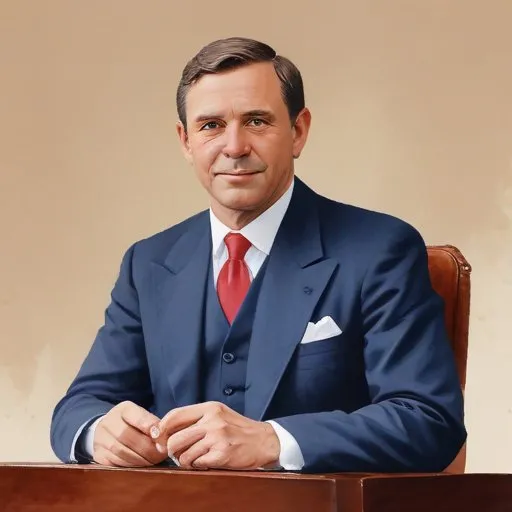
American merchant and politician who served as the 73rd Mayor of New York City, known for his pro-Southern sympathies and attempts to secede New York City from the Union during the American Civil War.
Fernando Wood, a name synonymous with politics, power, and controversy, served as the 73rd and 75th Mayor of New York City, leaving an indelible mark on the city's history. His tenure was marked by an unapologetic vision of the office, political corruption, and a bold advocate for unilateral reform of the city charter.
Wood's rise to power was nothing short of meteoric. Born on February 14, 1812, in Philadelphia, he rapidly rose through the ranks of Tammany Hall, eventually becoming a prominent figure in New York City's political landscape. His early career saw him serve a single term in the U.S. House of Representatives before returning to private life, where he built a fortune in real estate speculation and maritime shipping.
Wood's mayoralty, which spanned three non-consecutive terms, was marked by controversy and power struggles. His vision for the office was almost dictatorial, and he was not afraid to flex his political muscle to achieve his goals. He advocated for unilateral reform of the city charter, seeking to strengthen his power and grant the city home rule. This move brought him into direct conflict with the Republican state legislature, ultimately leading to a charter revision that prematurely ended his second term in office and resulted in his arrest.
Throughout his career, Wood expressed political sympathies for the Southern United States, including during the American Civil War. In a move that shocked many, he suggested to the New York City Council that the city should declare itself an independent city-state in order to continue its profitable cotton trade with the Confederate States of America. This move sparked outrage and cemented his reputation as a controversial figure.
After leaving the mayor's office, Wood was elected to several more terms in the House of Representatives, where he served for sixteen years. He served as Chairman of the powerful House Committee on Ways and Means in his final two terms. Wood's later life was marked by continued controversy, including his vocal opposition to President Abraham Lincoln and his role as one of the main opponents of the Thirteenth Amendment, which abolished slavery in the United States.
Wood's political beliefs were shaped by his strong conviction in states' rights and limited government intervention. He was a staunch advocate for local control and believed that the government should not interfere with the economic and social affairs of its citizens. This philosophy guided his decision-making throughout his career, often putting him at odds with his political opponents.
Wood's business ventures and investments made him a wealthy man. His net worth at the time of his death was estimated to be in the millions, a staggering amount for the late 19th century. His financial impact on New York City was significant, with his investments in real estate and maritime shipping contributing to the city's growth and development.
Fernando Wood's legacy continues to shape the political landscape of New York City. His advocacy for local control and limited government intervention remains a relevant topic in modern politics. While his controversial stance on slavery and states' rights has been widely criticized, his unwavering commitment to his beliefs is a testament to the complexity of human nature.
Fernando Wood, a complex and controversial figure, left an indelible mark on New York City's history. His unapologetic vision for the office, political corruption, and advocacy for unilateral reform of the city charter cemented his place as one of the most notorious mayors in the city's history. As we reflect on his life and legacy, we are reminded that even the most flawed individuals can leave a lasting impact on society.
Born in 1823
Notorious leader of Tammany Hall, a powerful political machine in New York City during the mid-19th century, known for his corrupt practices and embezzlement of millions of dollars.
Born in 1837
The first Democrat elected after the Civil War, he served two non-consecutive terms, earning him a unique spot in history, and is often remembered for his strong leadership and commitment to limited government.
Born in 1829
The 21st President of the United States, a strong advocate for civil service reform, is most known for signing the Pendleton Civil Service Act, which transformed the federal government's hiring practices. He's also remembered for his unexpected rise to presidency after the assassination of James A. Garfield.
Born in 1831
The 20th President of the United States was a multifaceted leader who served as a general in the Civil War and later became a lawyer and politician, known for his strong advocacy for education and civil rights. He's also infamous for being assassinated just six months into his presidency.
Born in 1822
The 19th President of the United States, a general, lawyer, and politician who ended the Reconstruction era and withdrew federal troops from the South, allowing Racial Segregation to begin. He's also known for being a strong supporter of education and civil service reform.
Born in 1822
Led the Union Army to victory in the Civil War and later became President, known for issuing the Emancipation Proclamation and strengthening federal authority.
45 Years Old
A dominant wide receiver in the NFL, known for his athleticism, sure hands, and impressive career statistics, earning him seven Pro Bowl selections.
