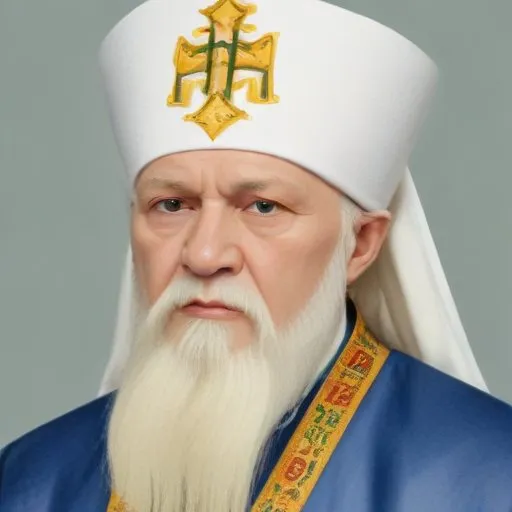
Filaret Denysenko: The Ukrainian Orthodox Church's Controversial Patriarch
A Life of Service and Controversy
Filaret Denysenko, also known as Mykhailo Antonovych Denysenko, is a Ukrainian religious leader who has served as the primate and Patriarch of the Ukrainian Orthodox Church - Kyiv Patriarchate. As a prominent figure in the Eastern Orthodox Church, Denysenko has been at the center of controversy and debate, with his tenure marked by both praise and criticism.
Early Life and Education
Born on January 23, 1929, in the village of Blahodatne, Donetsk Oblast, Ukraine, Denysenko was raised in a worker's family. His parents, Anton and Melania Denysenko, instilled in him a strong sense of faith and duty. Denysenko pursued his theological education at the Odesa Seminary and the Moscow Theological Academy, where he became a close associate of Patriarch Alexius I of Moscow.
Rise to Prominence
Denysenko took monastic vows in 1950, assuming the monastic name Filaret, and was ordained hierodeacon in January 1950 and priest in June 1951. After his graduation, he remained at the Moscow Theological Academy as a professor and Senior Assistant to the Academy inspector. In 1956, he was appointed Inspector of the Theological Seminary in Saratov and elevated to the rank of Archimandrite.
Metropolitan of Kiev and Exarch of Ukraine
In 1966, Denysenko was appointed Metropolitan of Kiev and Exarch of Ukraine in the Patriarchate of Moscow, a position he held until 1992. During his tenure, he worked to strengthen the Orthodox Church in Ukraine and promote unity among the faithful.
Defrocking and Excommunication
In 1992, Denysenko joined the Ukrainian Orthodox Church - Kyiv Patriarchate, which led to his defrocking and excommunication by the Russian Orthodox Church (ROC) in 1997. The ROC viewed his actions as a betrayal and a threat to the unity of the Orthodox Church.
Reinstatement and Legacy
On October 11, 2018, the Patriarchate of Constantinople reinstated Denysenko to church communion, recognizing his status as a bishop. However, the Ecumenical Patriarchate never recognized him as Patriarch, viewing him as the former Metropolitan of Kyiv.
Influence on Modern Society
Throughout his life, Denysenko has been a polarizing figure, with some viewing him as a champion of Ukrainian Orthodox independence and others seeing him as a divisive force. His legacy continues to shape the landscape of Eastern Orthodoxy, with his impact felt far beyond Ukraine's borders.
Career Highlights and Major Works
- Metropolitan of Kiev and Exarch of Ukraine (1966-1992)
- Patriarch of the Ukrainian Orthodox Church - Kyiv Patriarchate (1992-2019)
- Honorary Patriarch emeritus of the Orthodox Church of Ukraine (2019-present)
Quotes and Memorable Sayings
- "The Orthodox Church is not just a denomination, but a way of life."
- "Ukraine's fate is inextricably linked to the fate of the Orthodox Church."
Historical Context and Legacy
Filaret Denysenko's life and career have been shaped by the complex and often tumultuous history of Ukraine and the Eastern Orthodox Church. His legacy serves as a testament to the enduring power of faith and the ongoing struggle for unity and independence.
Impact on Ukrainian Identity
As a leading figure in Ukrainian religious life, Denysenko has played a significant role in shaping Ukrainian identity and culture. His commitment to the Ukrainian Orthodox Church has helped to promote national pride and unity.
Awards and Honors
- Order of Prince Yaroslav the Wise (Ukraine)
- Order of St. Vladimir (Ukrainian Orthodox Church)
Charitable Work and Social Contributions
Throughout his career, Denysenko has been actively involved in various charitable initiatives, including disaster relief efforts and educational programs. His commitment to social justice and human welfare has earned him widespread respect and admiration.
FAQ
What is the significance of Filaret Denysenko in Ukrainian Orthodox Church?
Filaret Denysenko is the Ukrainian Orthodox Churchs patriarch who played a crucial role in Ukraines struggle for religious independence from Moscows influence. He was instrumental in establishing the Ukrainian Orthodox Church – Kyiv Patriarchate.
What were the key achievements of Filaret Denysenko in Ukraine?
Filaret Denysenkos achievements include promoting Ukraines spiritual revival, establishing the Ukrainian Orthodox Churchs independence, and fostering closer ties with other Orthodox churches. He was also a vocal advocate for Ukraines cultural and national identity.
How did Filaret Denysenko contribute to Ukraines independence movement?
Filaret Denysenko actively supported Ukraines independence movement, encouraging Ukrainians to fight for their freedom and self-determination. His leadership and influence helped to galvanize the Orthodox Churchs role in Ukraines struggle for independence.
What was Filaret Denysenkos stance on ecumenism and interfaith dialogue?
Filaret Denysenko was a strong advocate for ecumenism and interfaith dialogue, working to strengthen relationships between the Ukrainian Orthodox Church and other Christian denominations. He also engaged in interfaith dialogue with representatives of other religions.
What is Filaret Denysenkos legacy in Ukrainian history?
Filaret Denysenkos legacy is marked by his tireless efforts to promote Ukraines spiritual and cultural revival, as well as his contributions to the countrys struggle for independence. He is revered as a champion of Ukrainian identity and a beacon of hope for the nation.