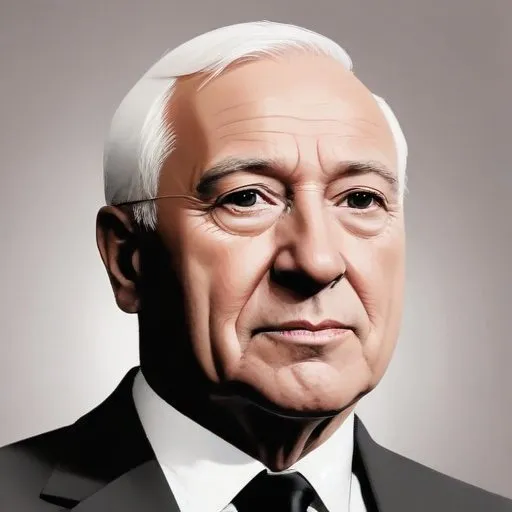
Filip Dewinter: A Polarizing Figure in Flemish Nationalism
Introduction
Filip Dewinter is a Belgian politician, journalist, and commentator known for his prominent role in the Vlaams Belang, a right-wing Flemish nationalist and secessionist political party. As one of the leading figures in the party, Dewinter has been a vocal advocate for Flemish independence and has been at the center of several controversies throughout his career.
Early Life and Education
Born on September 11, 1962, Dewinter's family background was marked by a strong sense of resistance against German occupation during World War II. His father, a medical student, was imprisoned and deported to Germany, while his maternal grandfather was an active member of the Witte Brigade, a resistance group in Blankenberge. This family history would later influence Dewinter's political beliefs and activism.
Dewinter's education was marked by early political activism. During his high school years at the Sint-Franciscus-Xaverius instituut in Bruges, he founded the Flemish Student Action Group, which later transformed into the Nationalist Young Students League. He went on to study political and social sciences at the University of Antwerp, although he dropped out at the end of his first year. Dewinter eventually completed a journalist degree at the Erasmus College in 1985.
Political Career
Dewinter's political career began as a teenager, when he briefly joined the nationalliberal Flemish Peoples Party, one of the precursor parties of the Flemish Block. He later became a member of the Nationalist Student Society, an ideological seminary of the Vlaams Belang. Throughout the 1980s, Dewinter worked as a reporter for the newspaper De Nieuwe Gids, the Antwerp edition of Het Volk.
In the 1990s, Dewinter rose to prominence within the Vlaams Belang, becoming a key figure in the party's leadership. He has been a vocal advocate for Flemish independence and has been critical of what he perceives as the perceived dominance of French-speaking Belgians.
Controversies and Criticisms
Dewinter has been at the center of several controversies throughout his career. His views on immigration, Islam, and multiculturalism have been criticized as xenophobic and racist. In 2004, he was convicted of inciting racial hatred and discriminating against foreigners.
Despite these criticisms, Dewinter remains a polarizing figure in Belgian politics, with some viewing him as a champion of Flemish nationalism and others seeing him as a far-right extremist.
Quotes and Memorable Sayings
- "We want to create a Flemish state, free from the dominance of the Wallons."
- "Multiculturalism is a threat to our cultural identity and our way of life."
Historical Context and Legacy
Filip Dewinter's rise to prominence in the 1990s coincided with a growing sense of Flemish nationalism in Belgium. His advocacy for Flemish independence has contributed to a shift in the country's political landscape, with many Flemish-speaking Belgians increasingly identifying as nationalists.
Dewinter's legacy is complex and contested. While he remains a divisive figure, his impact on Flemish nationalism and Belgian politics cannot be denied. His continued influence within the Vlaams Belang ensures that his views on Flemish independence and multiculturalism will remain a part of the country's political discourse.
Personal Life and Milestones
Dewinter's personal life has been marked by controversy and criticism. He has been accused of having links to far-right groups and has been involved in several high-profile feuds with political opponents.
Despite these controversies, Dewinter remains a prominent figure in Belgian politics, known for his unwavering commitment to Flemish nationalism.
Comparative Analysis with Contemporaries
Filip Dewinter's politics and ideology can be compared to those of other European nationalist leaders, such as France's
Marine Le Pen and Austria's
Heinz-Christian Strache. While their specific ideologies differ, they share a common concern with preserving national identity and resisting perceived threats from immigration and multiculturalism.
Conclusion
Filip Dewinter is a complex and polarizing figure, known for his advocacy of Flemish nationalism and his critiques of multiculturalism. While his views have been criticized as xenophobic and racist, he remains a significant figure in Belgian politics, with a continued influence on the country's political discourse. As the debate around Flemish independence and multiculturalism continues, Dewinter's legacy is likely to remain a topic of contention and discussion.
FAQ
What political party is Filip Dewinter affiliated with?
Filip Dewinter is affiliated with the Vlaams Belang party in Belgium, which is a right-wing nationalist party.
What is Filip Dewinters stance on immigration?
Filip Dewinter has taken a hardline stance on immigration, calling for stricter controls and reductions in asylum seekers.
What public offices has Filip Dewinter held?
Filip Dewinter has held several public offices, including Member of the Flemish Parliament and Member of the Belgian Senate.
What controversies has Filip Dewinter been involved in?
Filip Dewinter has been involved in several controversies, including allegations of racism and xenophobia, as well as criticism for his stance on immigration and multiculturalism.
What is Filip Dewinters approach to politics?
Filip Dewinter has said that he approaches politics as a way to defend Flemish identity and interests, and to promote a more conservative and traditional values-based agenda.