


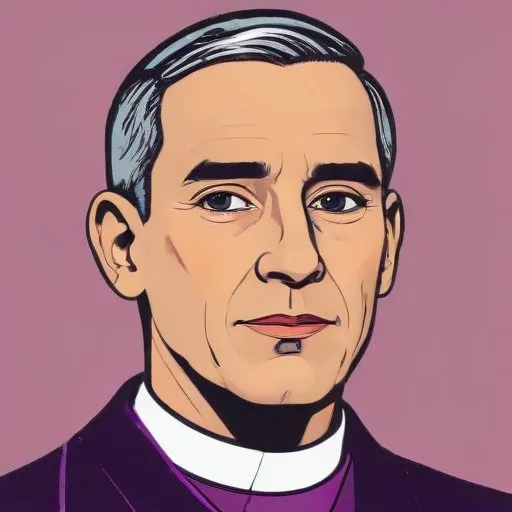
A Cuban-born priest who advocated for Cuban independence and education, and is considered the "Father of Cuban Independence" for his influential writings and teachings.
Flix Varela y Morales, a Cuban Catholic priest, is renowned for his unwavering commitment to independence and his advocacy for the abolition of slavery in Cuba. Born on November 20, 1788, in Havana, Cuba, Varela's life was dedicated to fighting for the rights and freedom of his people.
Varela was born into a prominent family in Havana, with his grandfather, Bartolom Morales, serving as the commander of military forces in Spanish Florida. After his mother's death in childbirth, Varela was raised by his grandfather in St. Augustine, Florida. As a teenager, he refused his grandfather's offer to send him to a military academy in Spain, opting instead to return to Cuba to pursue his priestly vocation.
Varela studied philosophy, physics, and chemistry at San Carlos and San Ambrosio Seminary in Havana, and later at the University of Havana. He was ordained as a priest at the age of 23 in the Cathedral of Havana for the Diocese of San Cristbal de la Habana.
Varela joined the seminary faculty within a year of his ordination, where he taught many illustrious Cubans, including Jos Antonio Saco, Domingo del Monte, Jos de la Luz y Caballero, and Felipe Poey. His students revered him, with De la Luz saying, "As long as there is thought in Cuba, we will have to remember him, the one who taught us how to think."
Varela established a literary society and published Miscelnea filosfica, a popular book on philosophy, before he was 30 years old. This publication solidified his reputation as a distinguished thinker and educator in Cuba.
In 1821, Varela was chosen to represent Cuba in the Cortes Generales of Spain in Madrid, where he joined in a petition to the Crown for the independence of Latin America. He also published an essay arguing for the abolition of slavery in Cuba. These bold actions sparked controversy and earned him the ire of the Spanish authorities.
Varela's advocacy for independence and abolition was unwavering, even in the face of adversity. He continued to speak out against the injustices of Spanish rule and the horrors of slavery, inspiring a generation of Cubans to fight for their freedom.
Flix Varela's contributions to Cuban history are immeasurable. He is celebrated as a hero and a champion of independence, and his legacy continues to inspire Cubans to this day. His advocacy for abolition helped pave the way for the eventual emancipation of slaves in Cuba in 1886.
Varela's commitment to education and his role as a teacher and mentor helped shape the minds of many prominent Cubans. His literary society and publications fostered a love of learning and critical thinking in Cuba, leaving a lasting impact on the country's intellectual landscape.
Flix Varela's life was a testament to his unwavering dedication to the causes of independence and abolition. His legacy continues to inspire Cubans and people around the world to fight for freedom, equality, and justice.
Born in 1853
A Cuban journalist, poet, and theorist who led the Cuban independence movement against Spanish rule and is revered as a national hero, known for his literary and philosophical works.
