


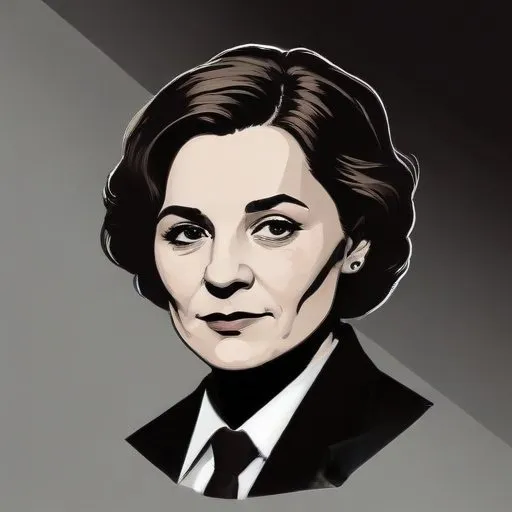
Pioneering Canadian forensic pathologist who helped establish the field of forensic science in Canada, known for her groundbreaking work in identifying human remains and solving crimes.
Known as the "Sherlock Holmes of Saskatchewan" for her extraordinary deductive skills and public fame, Frances Gertrude McGill was a Canadian forensic pathologist, criminologist, bacteriologist, allergologist, and allergist who revolutionized the field of forensic pathology in Canadian police work.
Born on November 18, 1882, in Minnedosa, Manitoba, McGill was the daughter of Edward McGill, whose family had emigrated from Ireland to Canada in 1819, and Henrietta Wigmore, a former school teacher who had once circumnavigated the globe. McGill's early life was marked by a strong foundation in education, which would later become a cornerstone of her illustrious career.
After completing her medical degree at the University of Manitoba in 1915, McGill moved to Saskatchewan, where she was hired as the provincial bacteriologist and later as the provincial pathologist. Her impressive skills and expertise soon caught the attention of the Royal Canadian Mounted Police (RCMP), with whom she collaborated extensively for over three decades.
McGill's groundbreaking work with the RCMP led to the establishment of the first RCMP forensic laboratory, which she directed for three years. During this period, she trained new RCMP recruits in forensic detection methods, solidifying her reputation as a leading authority in the field.
McGill's contributions to forensic pathology extended far beyond her work with the RCMP. She was an acknowledged specialist in allergy testing, and doctors across Saskatchewan referred patients to her care. Her private medical practice focused on the diagnosis and treatment of allergies, making her a pioneer in this area.
In recognition of her outstanding achievements, McGill was appointed Honorary Surgeon for the RCMP by the Canadian Minister of Justice in 1946, becoming one of the first official female members of the force. She continued to act as a consultant to the RCMP until her death in 1959.
McGill's remarkable career was marked by numerous accolades and honors. She was inducted into the Canadian Science and Engineering Hall of Fame, a testament to her profound impact on the scientific community.
In her honor, McGill Lake in northern Saskatchewan was named after her, a lasting tribute to her remarkable legacy.
Frances Gertrude McGill's groundbreaking work in forensic pathology paved the way for future generations of scientists and law enforcement professionals. Her pioneering spirit and exceptional expertise continue to inspire and influence the development of forensic science in Canada and beyond.
Through her tireless efforts, McGill not only earned the respect and admiration of her peers but also left an indelible mark on the world of forensic pathology, cementing her place as one of the most remarkable women in Canadian scientific history.
Born in 1849
A renowned physician and author who revolutionized medical education and practice with his emphasis on bedside learning and humane patient care. He's also known for his witty writings and insightful essays on medicine and life.
Born in 1831
Canada's first female physician to practice medicine in the country, known for her pioneering work in women's rights and suffrage.
