


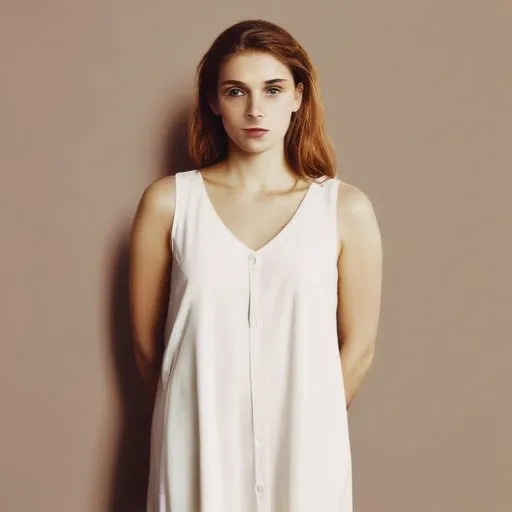
Experimental photographer known for haunting, intimate, and often surreal self-portraits that explore the female body and identity. Her work is characterized by a sense of vulnerability and introspection.
Francesca Woodman was an American photographer renowned for her hauntingly beautiful black and white images that explored the complexities of the human form, often blurring the lines between reality and abstraction. Her innovative use of long exposure times, motion, and deliberate obscurity of faces created an atmospheric, enigmatic quality that continues to captivate audiences to this day.
Born on April 3, 1958, in Denver, Colorado, Woodman was the daughter of artists George Woodman and Betty Woodman (née Abrahams). Her multicultural upbringing, with a Jewish mother and Protestant father, would later influence her exploration of identity and self in her work. Woodman's older brother, Charles, would go on to become an associate professor of electronic art.
Woodman's fascination with photography began at the tender age of 13, when she took her first self-portrait. This early experimentation would lay the foundation for her distinctive style, which often featured herself or female models as the primary subjects. Her family's frequent summers in Italy, where they lived on an old farm in the Florentine countryside, exposed her to the rich cultural heritage of the region, further inspiring her artistic vision.
Woodman attended Abbot Academy, a private Massachusetts boarding school, where she honed her photographic skills and developed a deep appreciation for the art form. After the academy merged with Phillips Academy in 1973, Woodman graduated from Boulder High School in 1975. She then went on to study at the Rhode Island School of Design (RISD) in Providence, Rhode Island, where she spent a year in Rome as part of an honors program.
In 1979, Woodman relocated to New York City, determined to establish herself as a photographer. During this period, she sent her portfolio to various galleries and publications, slowly building a reputation for her innovative and provocative work.
Woodman's photographs often explored the tension between the self and the external world, frequently using her own body as a canvas. Her work was influenced by the avant-garde movements of the 1970s, as well as the feminist and postmodern ideologies of the time. Her use of long exposure times and deliberate blurring of faces created an air of mystery, encouraging the viewer to engage more deeply with the subject matter.
Despite her tragically short career, cut short by her untimely death at 22, Woodman's work continues to receive widespread critical acclaim. Her photographs are held in the permanent collections of prominent institutions such as the Museum of Modern Art and the Whitney Museum of American Art. Her influence can be seen in the work of numerous contemporary photographers, including Cindy Sherman and Nan Goldin.
"I want to be seen, but I don't want to be seen."
These words, penned by Woodman, encapsulate the core of her artistic vision – the delicate dance between self-revelation and concealment that underpins her photographs.
Today, Francesca Woodman's work remains a testament to the power of photography to capture the human experience in all its complexity and beauty. Her enigmatic images continue to inspire and intrigue, inviting viewers to confront the mysteries of the self and the world around them.
72 Years Old
A pioneering artist known for her provocative and introspective photographs that challenge traditional representations of identity, gender, and beauty. Her work often features herself as the model, exploring various personas and characters.
73 Years Old
A pioneering photographer capturing intimate, often provocative portraits of marginalized communities and the LGBTQ+ scene, pushing boundaries of documentary storytelling.
80 Years Old
A provocative and innovative photographer who pushed boundaries with his bold, sensual, and often controversial images of the human form, exploring themes of sexuality and identity.
79 Years Old
Appropriation artist who rephotographed and re-presented existing works, challenging notions of originality and authorship. Known for sparking debates on postmodernism and the nature of art.
Born in 1723
A 18th-century minister and philosopher who advocated for moral and political reform, and is best known for his influential writings on ethics, politics, and economics.
