


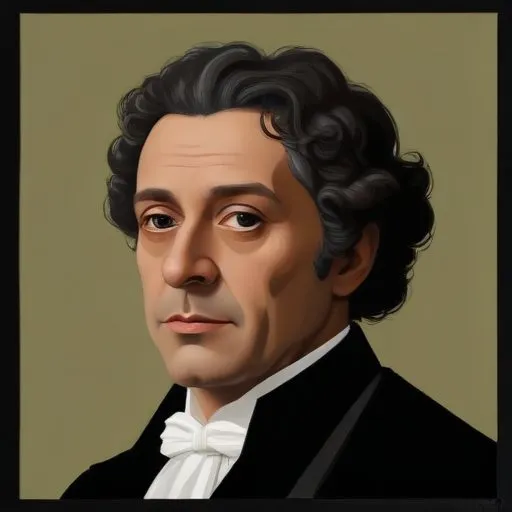
A Renaissance-era composer who wrote music for the Medici family and was known for his madrigals and sacred works. He was a prominent figure in the Florentine musical scene during the 16th century.
Francesco Corteccia, a renowned Italian composer, organist, and teacher, is best known for his integral role in shaping the music landscape of the Renaissance era, particularly in Florence during the reign of Cosimo I de Medici. As one of the most prominent musicians of his time, Corteccia's contributions to the development of madrigals and his position as maestro di cappella to the Medici court cement his status as a musical giant of the 16th century.
Born in Florence on July 27, 1502, Corteccia's early life was marked by a passion for music. By 1515, he was a choirboy and enrolled in the cathedral school, where he likely studied organ with Bartolomeo degli Organi and composition with Bernardo Pisano. These formative years laid the foundation for his future success as a composer and musician.
Corteccia's rise to prominence began on October 22, 1527, when he became a chaplain at the baptistry. He soon entered the employ of the Medici family, serving as both chaplain and organist at the church of San Lorenzo, the Medici family church. From 1535 to 1539, he held the position of organist at San Lorenzo, and in 1540, he was appointed maestro di cappella to the court of the Duke of Florence, Cosimo I de Medici. This appointment marked the beginning of a long and fruitful relationship between Corteccia and the Medici family.
As maestro di cappella, Corteccia played a crucial role in creating some of the most opulent and elaborate musical productions of the Medici court. His compositions, particularly his madrigals, showcased his mastery of harmony and counterpoint, earning him recognition as one of the leading composers of his time. Although he was eventually replaced by Alessandro Striggio as the primary composer for the Medici court, Corteccia's legacy as a musician and composer endured, and he remained maestro di cappella until his death in 1571.
Corteccia's contributions to the development of Renaissance music have had a lasting impact on the classical music landscape. His madrigals, in particular, influenced the development of subsequent musical forms, such as the opera and oratorio. Today, Corteccia's music remains a testament to the innovative spirit of the Renaissance, inspiring new generations of musicians and music enthusiasts alike.
Francesco Corteccia's life and work are inextricably linked to the cultural and artistic flowering of the Renaissance. His music, rooted in the rich cultural heritage of Florence, reflects the city's status as a hub of artistic innovation and creativity. As a composer, musician, and teacher, Corteccia played a vital role in shaping the musical identity of Florence, leaving behind a legacy that continues to inspire and enrich our understanding of Renaissance music.
Born in 1567
A Baroque music pioneer who revolutionized the opera and sacred music genres with innovative harmonies and orchestration, leaving an indelible mark on classical music.
