


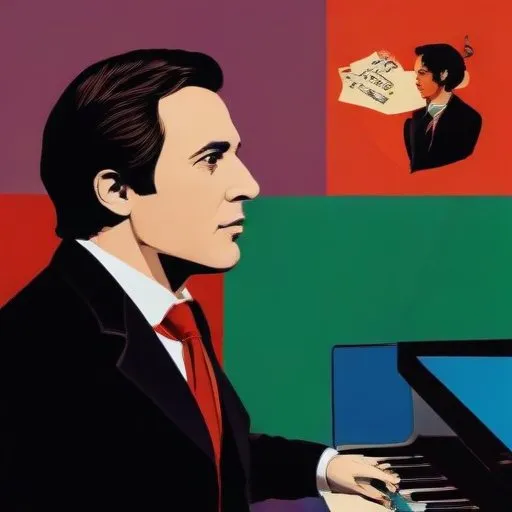
A renowned pianist, composer, and conductor celebrated for his virtuosic performances and innovative interpretations of classical music. He is particularly recognized for his renditions of Liszt's works.
Francesco Libetta, the renowned Italian pianist, composer, and conductor, has mesmerized audiences worldwide with his exceptional artistry, earning him the title of "poet-aristocrat of the keyboard." Born on October 16, 1968, in Galatone, Southern Italy, Libetta's remarkable career has cemented his position as one of the most talented and creative pianists of our time.
Libetta's repertoire is impressively vast, encompassing a wide range of classical masterpieces. He has performed all of Beethoven's 32 piano sonatas, several Mozart and Beethoven concertos, the complete Handel and Chopin works, as well as major pieces by Schubert, Schumann, Debussy, and Ravel. His exceptional skill and technique have allowed him to tackle even the most challenging compositions, including the 53 Studies by Godowsky based on Chopin's 27 Studies.
As a conductor, Libetta has led symphonic orchestras in performances of renowned works, including collaborations with the Balletto del Sud in major Tchaikovsky ballets. His compositional talents have resulted in three piano concertos, symphonic pieces, electronic music, and ballet and movie scores. His writings include historical and aesthetic essays, showcasing his deep understanding of music and its cultural context.
Libetta's exceptional talent has been recognized with numerous awards and accolades. One of his DVDs, featuring a recital at the Festival de La Roque d'Anthéron in France, was awarded the Diapason d'Or. John Ardoin, a leading music critic, has praised Libetta as "the most inspired and creative" among the new generation of pianists.
In 2005, Libetta made his cinematic debut with a short role in Franco Battiato's movie "Musikanten," a biographical drama about Beethoven's life. Four years later, his first opera, "Ottocento" (Eight Hundred), premiered in Otranto and Rome, telling the story of 800 victims of religious war in South Italy in 1480.
Libetta has shared his knowledge and expertise by teaching Chamber Music at the T. Schipa Conservatory in Lecce. As a dedicated educator, he has inspired a new generation of musicians, ensuring the continuation of his artistic legacy.
Francesco Libetta's remarkable career has left an indelible mark on the world of classical music. His exceptional artistry, diverse repertoire, and multifaceted talents have solidified his position as one of the most celebrated pianists, composers, and conductors of our time.
Born in 1770
A musical genius who expanded the possibilities of classical music, creating iconic symphonies and piano sonatas that continue to inspire and influence generations of artists.
Born in 1811
A virtuosic pianist and composer who revolutionized classical music with his technically demanding and emotionally expressive works, blending Hungarian folk influences with Romantic-era drama.
Born in 1810
A Polish pianist and composer renowned for his delicate, expressive, and technically demanding piano music that evokes deep emotions and continues to inspire generations of musicians and music lovers. His nocturnes, waltzes, and preludes are staples of classical music.
Born in 1813
A renowned composer of iconic operas like La Traviata and Aida, known for his masterful blending of drama and music. His works continue to captivate audiences worldwide.
Born in 1792
Operatic mastermind behind iconic comedies like "The Barber of Seville" and "William Tell," crafting catchy, witty, and playful music that still delights audiences today.
Born in 1801
Operatic mastermind behind bel canto classics like "Norma" and "La Sonnambula", renowned for their beautiful, expressive melodies and dramatic flair.
Born in 1797
A renowned Italian composer of the Romantic era, best known for his operas, particularly "L'elisir d'amore" and "Don Pasquale", which are still widely performed today.
Born in 1782
A virtuosic violinist and composer who revolutionized the instrument's technical possibilities, leaving an indelible mark on classical music.
