


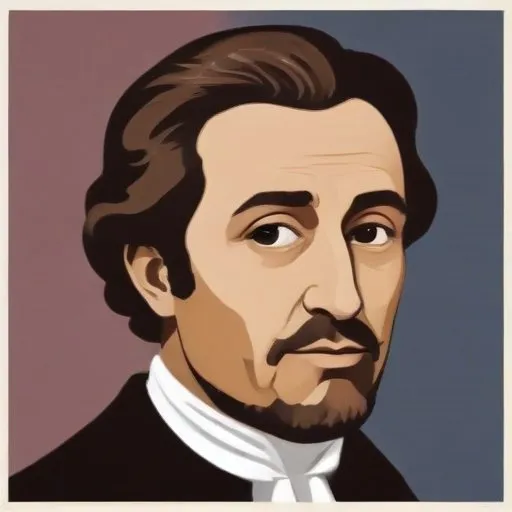
A Renaissance master of music theory and composition, he wrote influential treatises on harmony and counterpoint, shaping the course of Western classical music.
Franchinus Gaffurius, a renowned Italian music theorist and composer of the Renaissance, is best known for his significant contributions to the development of music theory and his influential treatises that shaped the understanding of music during his time. His groundbreaking works, including Theorica musicae, Practica musicae, and De harmonia musicorum instrumentorum opus, remain essential resources for musicians and scholars alike.
Born on January 14, 1451, in Lodi, Italy, Gaffurius came from an aristocratic family and entered a Benedictine monastery at a young age, where he received his early musical training. He later became a priest and continued his education, eventually settling in Milan as the maestro di cappella at the city's cathedral in 1484.
Gaffurius's tenure at the Milan cathedral marked the beginning of a remarkable career that spanned over three decades. During this period, he worked alongside some of the most prominent composers and musicians of the time, including Josquin des Prez and Leonardo da Vinci. His interactions with these luminaries had a profound impact on his work, allowing him to develop a unique understanding of the complexities of Renaissance music.
Gaffurius's works had a profound impact on the development of Renaissance music, influencing some of the most prominent composers of the time, including Alexander Agricola, Loyset Compre, and Johannes Martini. His pedagogical approach and thorough understanding of music theory made him an invaluable resource for aspiring composers.
Today, Gaffurius is remembered as a true Renaissance man, whose contributions to music theory and composition continue to inspire and educate musicians around the world.
Gaffurius's time in Milan brought him into contact with some of the most influential figures of the Renaissance, including Leonardo da Vinci and Josquin des Prez. These interactions not only shaped his musical style but also left an indelible mark on his personal life.
Despite his many accomplishments, Gaffurius remained humble and dedicated to his craft, devoting his life to the pursuit of musical excellence.
Gaffurius's life and work are a testament to the cultural and artistic vibrancy of Renaissance Italy. His contributions to music theory and composition helped shape the course of Western music, leaving a lasting legacy that continues to inspire and educate generations of musicians.
Franchinus Gaffurius's remarkable story is a reminder of the power of dedication, hard work, and passion, and serves as a beacon of inspiration for anyone pursuing a career in the arts.
Born in 1452
Renaissance mastermind behind iconic works like the Mona Lisa and The Last Supper, who revolutionized art, science, and engineering with his inventive and curious nature.
Born in 1475
Renaissance master of iconic works like the ceiling of the Sistine Chapel, creating breathtakingly beautiful and emotionally powerful art that continues to inspire and awe.
