


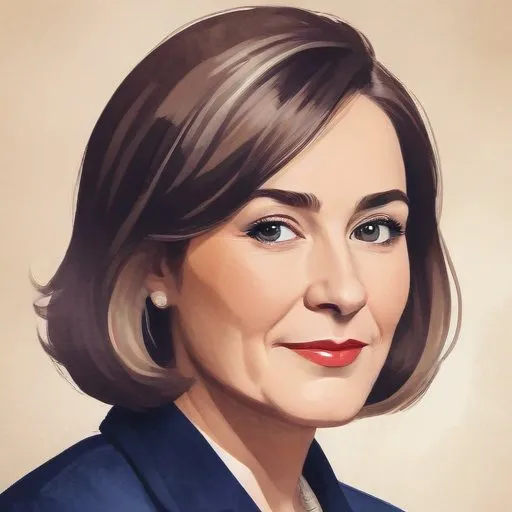
Francine Lalonde was a trailblazing Canadian politician who dedicated her life to fighting for social justice, human rights, and women's empowerment. As a prominent figure in Canadian politics, she is best known for her tireless advocacy for assisted suicide and her unwavering commitment to the Quebec sovereignty movement.
Before entering politics, Lalonde worked as a lecturer, teacher, and unionist, demonstrating her passion for education and social reform. Her experience in these roles laid the foundation for her future political career, where she would champion the causes of the marginalized and disadvantaged.
In 1985, Lalonde was appointed Minister responsible for the status of women in the Lévesque government, a role that solidified her reputation as a fierce advocate for women's rights. Although she resigned from the position following her defeat in the byelection, her dedication to women's empowerment remained unwavering.
In 1993, Lalonde was elected to the House of Commons of Canada as a Bloc Québécois member, representing the district of Mercier. She went on to serve in various capacities, including as the Bloc's critic for Human Resources Development, Industry, and Foreign Affairs. Her commitment to Quebec sovereignty and social justice earned her a reputation as a respected and influential politician.
In 2005, Lalonde introduced Private Bill C-407, which sought to legalize assisted suicide in Canada. Although the bill ultimately did not pass, her efforts sparked a national conversation about end-of-life care and individual autonomy. Reelected in 2006, she remained a vocal advocate for assisted suicide, ensuring that the issue remained on the political agenda.
Francine Lalonde's remarkable career serves as a testament to her unwavering dedication to creating a more just and equitable society. Her advocacy for assisted suicide, women's empowerment, and Quebec sovereignty has left an indelible mark on Canadian politics. As a champion of social justice and human rights, her legacy continues to inspire future generations of activists, politicians, and leaders.
Lalonde's electoral record is a reflection of her commitment to serving her constituents and fighting for the causes she believed in. Throughout her career, she remained a respected and influential figure in Canadian politics, earning the admiration of her peers and the gratitude of those she served.
Born in 1919
The charismatic leader who championed Canadian unity and implemented progressive policies, known for his iconic style and influential legacy in shaping modern Canada.
92 Years Old
The 20th Prime Minister of Canada, serving from 1993 to 2003, known for his leadership during the Quebec sovereignty movement and his role in shaping Canada's national unity. He implemented policies like the Clarity Act and the National Child Benefit.
Born in 1922
A charismatic leader who championed Quebec's independence and shaped the province's distinct identity through his passionate politics and journalism. He's revered for his role in Quebec's Quiet Revolution.
87 Years Old
The 18th Prime Minister of Canada, a skilled lawyer and politician, led the country from 1984 to 1993, known for negotiating the Canada-US Free Trade Agreement and introducing the Goods and Services Tax.
79 Years Old
The first and only female Prime Minister of Canada, serving for a brief four months in 1993, known for her efforts to reform the country's justice system. She was also a strong advocate for women's rights and gender equality.
97 Years Old
The 17th Prime Minister of Canada, serving from 1984 to 1985, is most known for his brief tenure and struggles to maintain party unity. He's also recognized for his prior role as Minister of Justice, where he introduced significant reforms.
87 Years Old
The 27th Premier of Quebec, a key figure in the Quebec sovereignty movement, known for leading the province's separatist government and negotiating with Canada's federal government.
