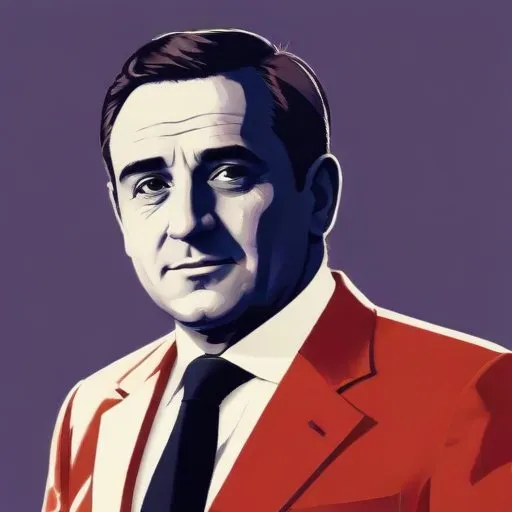
Franco Carraro: The Italian Sports Maestro
A Lifetime of Sports Administration and Politics
Franco Carraro is an Italian sports manager and politician, renowned for his extensive career in the public and private sectors, with a focus on football and the Olympic movement. He is the epitome of a sports administrator, having held numerous high-profile roles in various organizations, shaping the landscape of Italian sports.
Early Life and Career
Born on December 6, 1939, in Padua, Kingdom of Italy, Carraro's journey in sports administration began in 1962, when he became the president of the Italian Waterski Federation, a position he held until 1976. During this period, he also served as the president of AC Milan, a prominent Italian football club, from 1967 to 1971.
Rise to Prominence
The 1970s marked a significant turning point in Carraro's career. He worked in the Italian Football Federation (FIGC) and later became the president of Serie A and Serie B, Italy's top two football leagues, from 1973 to 1976. His exceptional leadership skills earned him the presidency of the FIGC from 1976 to 1978.
Olympic Odyssey
On May 19, 1978, Carraro resigned as the FIGC president to become the president of the Italian National Olympic Committee (CONI), a role he held until 1987. This marked the beginning of his long-standing association with the Olympic movement. He became a member of the International Olympic Committee (IOC) in 1982 and remained so until 2019, when he retired and was appointed as an honorary member.
Calciopoli and UEFA Tenure
The 1986 Italian football betting scandal, known as Totonero, led to Carraro's appointment as the FIGC commissioner from 1986 to 1987. He later became the president of the Italia 90 Committee, responsible for organizing the 1990 FIFA World Cup. In 2004, he joined the UEFA executive board, serving until 2009.
Impregilo and FIGC Presidency
In 1994, Carraro became the president of Impregilo, Italy's largest construction company. He returned to the FIGC presidency in 1997, holding the position until 2001, and again from 2001 to 2006. During his tenure, he played a crucial role in shaping Italian football.
Legacy and Impact
Franco Carraro's contributions to Italian sports and the Olympic movement are unparalleled. His dedication, leadership, and vision have left an indelible mark on the sports landscape. As a respected figure in the international sports community, Carraro's legacy continues to inspire future generations of sports administrators and enthusiasts alike.
- 1962-1976: President, Italian Waterski Federation
- 1967-1971: President, AC Milan
- 1973-1976: President, Serie A and Serie B
- 1976-1978: President, FIGC
- 1978-1987: President, CONI
- 1982-2019: Member, IOC
- 1986-1987: Commissioner, FIGC
- 1990: President, Italia 90 Committee
- 1994-2001: President, Impregilo
- 1997-2001: President, FIGC
- 2001-2006: President, FIGC
- 2004-2009: Member, UEFA Executive Board
FAQ
What are Franco Carraros contributions to Italian sports?
Franco Carraro has made significant contributions to Italian sports, serving as the President of the Italian National Olympic Committee from 1993 to 2013 and playing a key role in Italys bid for the 2006 Winter Olympics.
What is Franco Carraros political career like?
Franco Carraro has had a long and distinguished political career, serving as a Member of the Italian Parliament from 1994 to 2006 and holding various ministerial positions, including Minister of Agriculture and Forestry.
What awards has Franco Carraro received?
Franco Carraro has received several awards for his contributions to sports and politics, including the Olympic Order and the Italian Republics highest honor, the Knight Grand Cross.
What is Franco Carraros role in international sports organizations?
Franco Carraro has played a key role in international sports organizations, serving as a member of the International Olympic Committee from 2000 to 2013 and as the President of the European Olympic Committees from 1997 to 2005.
What is Franco Carraros early life and education like?
Franco Carraro was born in 1937 in Padua, Italy, and graduated from the University of Padua with a degree in law. He also holds a degree in sports science from the University of Rome.