


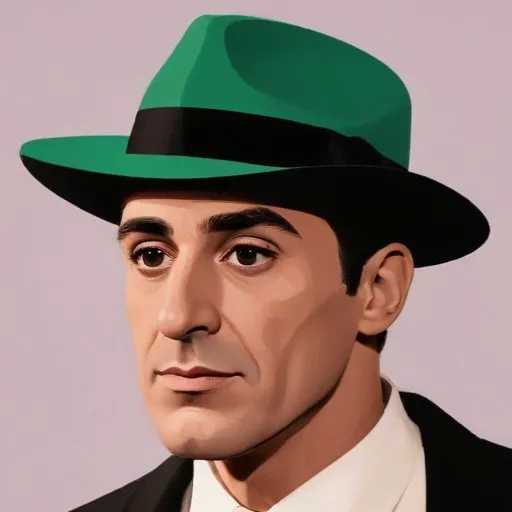
An Italian actor who appeared in over 100 films, often playing villainous or comedic roles, and was a prominent figure in Italian neorealism. He worked with renowned directors like Federico Fellini and Michelangelo Antonioni.
Franco Gasparri, born Gianfranco Gasparri, was an Italian actor known for his iconic roles in peplum films and poliziottesco, particularly his portrayal of Inspector Mark Terzi in the Mark of the Cop trilogy. With a career spanning over two decades, Gasparri became a household name in Italy, captivating audiences with his rugged charm and exceptional acting skills.
Gasparri was born on October 31, 1948, in Senigallia, Italy, to Rodolfo Gasparri, a painter and film poster artist. He began his acting career as a child, appearing in several peplum films, a genre of Italian sword-and-sandal films.
After completing his military service as a paratrooper, Gasparri's career took off in 1970 when he became one of the most successful actors in fotoromanzi, a type of Italian photo-comic publication. His rugged good looks and charismatic on-screen presence made him a fan favorite.
Gasparri's breakthrough role came in 1975 when he played Inspector Mark Terzi in Mark of the Cop, a poliziottesco film that became a massive success. The film's success led to two sequels, Mark Shoots First and Mark Strikes Again, both featuring Gasparri in the titular role.
The Mark of the Cop trilogy cemented Gasparri's status as a leading man in Italian cinema, earning him a large following and critical acclaim.
In a cruel twist of fate, Gasparri's promising career was cut short when he was involved in a near-fatal motorcycle accident that left him wheelchair-bound. Despite this setback, Gasparri continued to act, albeit in a reduced capacity.
Tragically, Gasparri passed away on March 28, 1999, at the age of 50, due to respiratory failure. His untimely death shocked the Italian film industry and left a void in the hearts of his fans.
Franco Gasparri's contributions to Italian cinema are still celebrated today. His iconic roles in peplum films and poliziottesco have inspired generations of actors and filmmakers. Despite his untimely passing, Gasparri's legacy continues to captivate audiences, reminding us of the impact he had on the world of cinema.
Franco Gasparri's story serves as a testament to the power of determination and passion. Despite the challenges he faced, he continued to pursue his dreams, leaving behind a legacy that will forever be etched in the annals of Italian cinema.
Born in 1922
A renowned Italian actor, director, and screenwriter who brought complexity and nuance to his characters, starring in over 100 films and winning numerous awards. He's a cultural icon in Italy, symbolizing the country's cinematic golden age.
Born in 1924
A renowned actor and singer, starring in over 150 films, including iconic Italian neorealist classics and international productions, earning him numerous awards and nominations.
Born in 1920
A renowned Italian comedian, actor, and filmmaker, celebrated for his witty, satirical portrayals of Italian culture and society, particularly in the 1950s and 1960s.
Born in 1921
A renowned Italian actor, director, and screenwriter, celebrated for his witty comedies and poignant dramas that explored the human condition, leaving an indelible mark on Italian cinema.
Born in 1922
A renowned Italian actor, comedian, and director, known for his witty humor and memorable performances in classic Italian comedies.
84 Years Old
A renowned Italian actor, director, producer, and screenwriter, known for his iconic roles in films like "L'innocente" and "Hannibal", bringing depth and charisma to his characters.
88 Years Old
Italian singer-songwriter, actor, and director known for his iconic music and films that blended comedy, drama, and social commentary, influencing Italian popular culture. He's a household name in Italy, with a career spanning over 60 years.
95 Years Old
An iconic Italian actress, singer, and screenwriter known for her striking features and captivating performances in 1960s art house films, particularly in Michelangelo Antonioni's classics.
