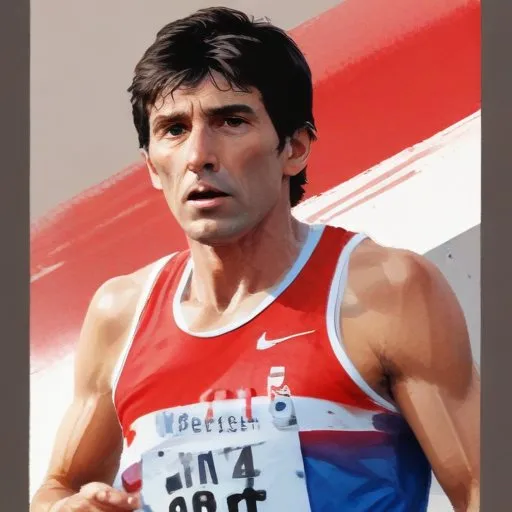
Frank Shorter: The Trailblazing Olympic Runner
A Golden Legacy in the World of Long-Distance Running
Frank Shorter is renowned for his remarkable achievements in the world of long-distance running, crowned with two Olympic medals, including a gold medal in the marathon at the 1972 Summer Olympics and a silver medal at the 1976 Summer Olympics. His exceptional performances on the global stage are credited with igniting the running boom in the United States during the 1970s.
Early Life and Education
Born on October 31, 1947, in Munich, Germany, Frank Shorter grew up in Middletown, New York, where a street was later named in his honor, Frank Shorter Way. He pursued his high school diploma from the Mount Hermon School in Gill, Massachusetts, in 1965. Subsequently, he graduated from Yale University in New Haven, Connecticut, with a Bachelor of Arts degree in 1969, and later from the University of Florida College of Law in Gainesville, Florida, with a Juris Doctor degree in 1974.
Running Career and Achievements
Shorter's running career was marked by numerous milestones and accolades. He first gained recognition by winning the 1969 National Collegiate Athletic Association (NCAA) six-mile run title during his senior year at Yale. He went on to win his first U.S. national titles in 1970 in the three-mile and six-mile events. Furthermore, he was the U.S. national six-mile/10,000-meter champion in 1971, 1974, 1975, and 1977.
Personal Milestones and Key Life Events
In a personal reflection, Shorter has spoken about the traumatic household life he experienced as a child, suffering physical abuse at the hands of his father. This experience has driven him to raise awareness about stopping cycles of violence. Shorter has used his platform to encourage others to speak out against domestic violence and to promote a culture of support and healing.
Influence on Modern Society
Frank Shorter's success on the track has had a profound impact on modern society. His achievements are credited with inspiring a generation of American runners, sparking a running boom in the United States during the 1970s. This surge in popularity led to increased participation in running events, improved infrastructure for runners, and a greater appreciation for the sport as a whole.
Career Highlights and Major Works
- Olympic gold medalist in the marathon at the 1972 Summer Olympics
- Olympic silver medalist at the 1976 Summer Olympics
- U.S. national six-mile/10,000-meter champion in 1971, 1974, 1975, and 1977
- Winner of the 1969 National Collegiate Athletic Association (NCAA) six-mile run title
Legacy and Historical Context
Frank Shorter's legacy extends beyond his impressive athletic achievements. He has been recognized for his contributions to the sport of running, including his role in promoting awareness about domestic violence. His story serves as a testament to the power of perseverance and resilience, inspiring generations of athletes and beyond.
Comparative Analysis with Contemporaries
When compared to his contemporaries, Frank Shorter's achievements stand out for their breadth and consistency. While other notable runners of the era, such as
Steve Prefontaine and
Bill Rodgers, achieved significant success, Shorter's Olympic medals and national titles demonstrate a sustained level of excellence across multiple events and distances.
Impact on Pop Culture
Frank Shorter's influence can be seen in popular culture, with his name and achievements referenced in various forms of media. His iconic status as a pioneering runner has inspired numerous films, books, and documentaries, cementing his place in the cultural consciousness.
Awards and Honors
Frank Shorter has received numerous accolades for his achievements, including:
- Inducted into the USA Track & Field Hall of Fame in 1989
- Inducted into the United States Olympic Hall of Fame in 1986
- Recipient of the James E. Sullivan Award in 1972
Trivia and Fun Facts
- Frank Shorter's father, Samuel S. Shorter, was a physician who served in the U.S. Army.
- Shorter graduated from Yale University with a Bachelor of Arts degree in 1969.
- He won the inaugural Orange Classic 10K in 1981, with the course route including Frank Shorter Way, a street named in his honor.
Conclusion
Frank Shorter's remarkable life and achievements serve as a testament to the power of dedication, perseverance, and resilience. As a trailblazing Olympic runner, he has left an indelible mark on the world of long-distance running, inspiring generations of athletes and beyond. His legacy continues to inspire and motivate, a lasting tribute to his unwavering commitment to his craft.
FAQ
What are Frank Shorters most notable athletic achievements?
Frank Shorter is a two-time Olympic gold medalist and four-time Olympic medalist in distance running, setting multiple American records in the 10,000 meters and marathon.
What is Frank Shorters coaching experience?
Frank Shorter has coached several Olympic athletes, including Steve Scott and Mary Slaney, sharing his expertise and knowledge with the next generation of runners.
How has Frank Shorter contributed to the sport of running?
Frank Shorter has been a pioneer in the sport of running, helping to popularize the sport and inspire countless runners around the world.
What is Frank Shorters broadcasting experience?
Frank Shorter has worked as a sportscaster, providing commentary for several Olympic Games and track and field events, sharing his expertise with a wider audience.
What is Frank Shorters take on modern distance running?
Frank Shorter has spoken out about the current state of distance running, advocating for cleaner sport and greater support for athletes, using his platform to drive positive change.