


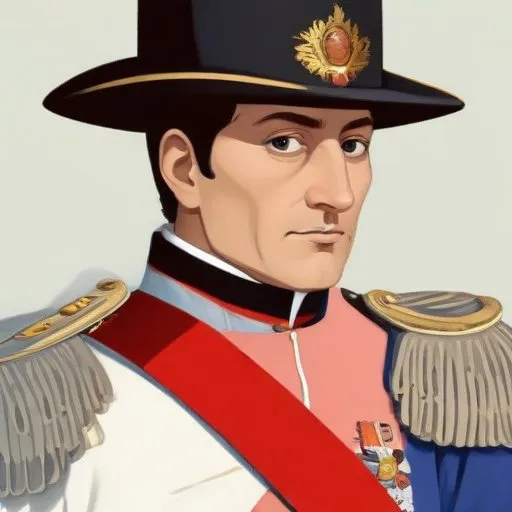
A renowned French military strategist and Marshal of France, celebrated for his victories in the Franco-Dutch War and his innovative tactics that transformed modern warfare.
Renowned for his exceptional military prowess, Franois Henri de Montmorency, duc de Luxembourg, was a French general and Marshal of France who left an indelible mark on the early modern period. Nicknamed "The Upholsterer of Notre-Dame" (Le Tapissier de Notre-Dame), Luxembourg's remarkable career was marked by a series of astonishing victories and strategic conquests.
Born on January 8, 1628, in Paris, France, Luxembourg's life was shaped by the circumstances of his father's execution six months prior to his birth. His father, Franois de Montmorency-Bouteville, was put to death for participating in a duel against the Marquis de Beuvron. Under the guidance of his aunt, Charlotte Marguerite de Montmorency, Princess of Cond, and her son, the Duke of Enghien, Luxembourg received a comprehensive education, which laid the foundation for his future successes.
Luxembourg's military career began during the Fronde, a period of civil unrest in France, where he fought alongside his cousin, the Duke of Enghien. After the Fronde, he was pardoned and returned to France in 1659. His marriage to Madeleine de Luxembourg, Princess of Tingry, in 1661, catapulted him to prominence, as he became the Duke of Luxembourg and a peer of France.
During the War of Devolution (1667-1668), Luxembourg served as Conds lieutenant general, contributing significantly to the conquest of Franche-Comté. The subsequent four-year period of peace allowed him to cultivate a close relationship with Louvois, a prominent figure in the French government. This connection proved instrumental in securing Luxembourg's appointment to a high command against the Dutch during the Franco-Dutch War (1672-1678).
The Battle of Seneffe (1674): Luxembourg led French forces to a resounding victory, defeating the Dutch army and securing a crucial triumph for France.
The Capture of Valenciennes (1677): Luxembourg's strategic brilliance enabled French forces to capture this crucial stronghold, cementing his reputation as a master tactician.
The War of the Grand Alliance (1688-1697): Luxembourg played a pivotal role in this global conflict, distinguishing himself in various campaigns and solidifying France's position as a dominant military power.
Franois Henri de Montmorency, duc de Luxembourg, left an enduring legacy in the realm of military strategy and tactics. Despite being physically slight and hunchbacked, he overcame these limitations to become one of France's greatest generals. His exploits continue to inspire and educate military historians and strategists to this day. As "The Upholsterer of Notre-Dame," Luxembourg's remarkable career serves as a testament to the power of determination, skill, and cunning in the pursuit of greatness.
Luxembourg's personal life was marked by his close relationships with prominent figures, including Cond, the Duke of Enghien, and Louvois. He was known for his remarkable capacity for loyalty and his ability to form lasting bonds with those around him.
Despite his many achievements, Luxembourg's life was not without controversy. His involvement in the Fronde and his later conflicts with prominent figures like Louvois and Vauban often placed him at the center of controversy.
Franois Henri de Montmorency, duc de Luxembourg, passed away on January 4, 1695, leaving behind a legacy that continues to captivate and inspire to this day.
Born in 1710
The monarch who ruled France from 1715 to 1774, known as the "Sun King's" great-grandson, and remembered for his extravagance, absolutism, and the decline of the French monarchy.
Born in 1633
A French noble and military engineer who designed and built numerous fortifications and siege engines, revolutionizing military architecture and warfare.
Born in 1644
A prominent French military leader during the 17th and 18th centuries, he played a significant role in several major conflicts, including the War of the Spanish Succession. He's also known for his architectural legacy, particularly in Paris.
Born in 1753
A skilled military strategist and Napoleon's chief of staff, he played a crucial role in many French military victories and was later appointed Minister of Defence. He's known for his exceptional organizational skills and ability to coordinate large-scale military operations.
