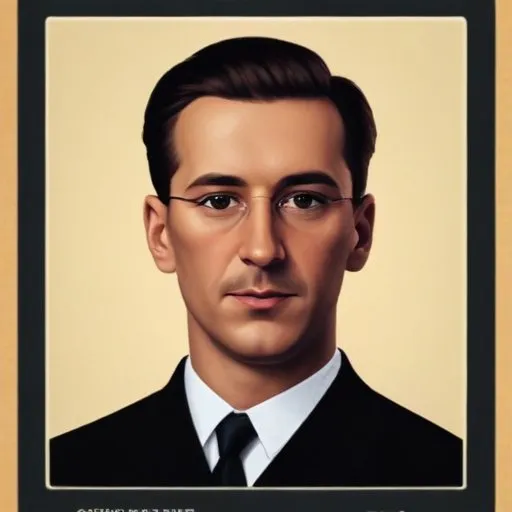
Franz Xaver Gabelsberger: The Pioneering Stenographer Behind the Gabelsberger Shorthand
The Invention that Revolutionized Writing
Franz Xaver Gabelsberger was a German stenographer who left an indelible mark on the world of writing with his invention of the Gabelsberger shorthand. This innovative system, which he developed in 1817, enabled rapid transcription and transformed the way people wrote, making it faster, easier, and more efficient.
A Humble Beginning
Born on February 9, 1789, in Munich, Germany, Gabelsberger's early life was marked by challenges. His father, a wind instrument manufacturer, passed away when he was still in school, forcing him to transfer to a convent school. Despite the setback, Gabelsberger persevered and finished his studies at the Alten Gymnasium in 1807.
The Birth of Gabelsberger Shorthand
Gabelsberger's fascination with writing and his quest for a faster method led him to develop his shorthand system. This was a time when rapid transcription was essential, particularly in the expanding German bureaucracies. Existing systems from England and France proved difficult to adapt to German, and Gabelsberger saw an opportunity to create something new.
Rise to Prominence
Gabelsberger's shorthand system quickly gained popularity, and he became the first stenographer for the Bavarian State Parliament. His exceptional skills in calligraphy also earned him recognition, and he was promoted to Ministerial Secretary. The Bavarian Academy of Sciences and Humanities certified his system as more reliable and legible than previous methods, further solidifying his reputation.
Awards and Recognition
In recognition of his groundbreaking work, Gabelsberger was awarded 1,000 Gulden per year, half of which was designated for his shorthand students. His method was officially named and published in 1834, and he designed an abbreviation typeface in 1840.
Gabelsberger's legacy extends far beyond his lifetime. His shorthand system was revised three times after his death, and by 1902, it had an estimated four million users. Today, monuments stand in his honor in Munich, Vienna, and Traunstein, and streets in numerous German and Austrian cities bear his name. The German Stenographers Association has also awarded a medal of honor featuring his likeness.
Personal Milestones and Key Life Events
- February 9, 1789: Born in Munich, Germany
- 1807: Finished studies at the Alten Gymnasium
- 1817: Began developing the Gabelsberger shorthand system
- 1834: Officially named and published his shorthand method
- 1840: Designed an abbreviation typeface
- January 4, 1849: Passed away after suffering a stroke
A Lasting Legacy
Franz Xaver Gabelsberger's contribution to the world of writing is immeasurable. His shorthand system remains an enduring testament to his innovative spirit and dedication to making writing faster, easier, and more efficient. As we continue to evolve in the digital age, Gabelsberger's legacy serves as a reminder of the power of human ingenuity and creativity.
FAQ
What was the significance of Franz Xaver Gabelsbergers invention of shorthand?
Franz Xaver Gabelsbergers invention of shorthand revolutionized the way people recorded information. His system of shorthand writing was fast, efficient, and widely adopted, and it remains in use today.
How did Franz Xaver Gabelsberger develop his shorthand system?
Franz Xaver Gabelsberger developed his shorthand system through years of research and experimentation. He was influenced by earlier systems of shorthand and incorporated many innovative features into his own system.
What were the advantages of Franz Xaver Gabelsbergers shorthand system?
Franz Xaver Gabelsbergers shorthand system had many advantages, including its speed, accuracy, and simplicity. It was widely adopted by journalists, secretaries, and other professionals who needed to record information quickly and efficiently.
What was Franz Xaver Gabelsbergers education and background?
Franz Xaver Gabelsberger was educated at the University of Munich and later worked as a teacher and journalist. He was a member of the Bavarian Academy of Sciences and was recognized for his contributions to language and communication.
What is Franz Xaver Gabelsbergers legacy in the field of language?
Franz Xaver Gabelsbergers legacy in the field of language is marked by his invention of shorthand. He is remembered as a pioneering figure in the development of language and communication systems.