


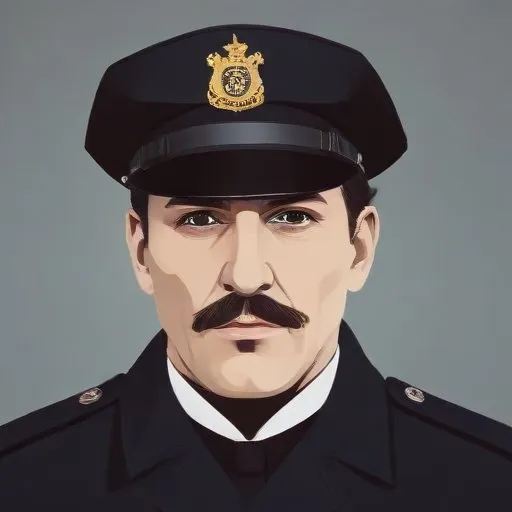
Led Scotland Yard's investigation into the Jack the Ripper murders, earning a reputation as a pioneering detective. His meticulous methods and innovative techniques set a new standard for forensic science.
Frederick Abberline is best known for his pivotal role in the investigation of the notorious Jack the Ripper serial killer murders that terrorized London's Whitechapel district in 1888. As a seasoned chief inspector for the London Metropolitan Police, Abberline's tireless efforts and sharp instincts brought him closer to catching the elusive killer, earning him a place in the annals of crime-solving history.
Abberline was born on January 8, 1843, in Blandford Forum, Dorset, England, to Edward Abberline, a saddlemaker, and his wife Hannah (née Chinn). After his father's death in 1849, Abberline's mother raised their four children alone, running a small shop to make ends meet.
Abberline's early career was marked by his service as a clockmaker. However, he soon left home to join the Metropolitan Police in London on January 5, 1863. His impressive performance earned him a promotion to Sergeant just two years later, on August 19, 1865. His subsequent transfers to various divisions, including Highgate and Whitechapel, honed his skills as a detective and laid the groundwork for his later success.
Abberline's most notable assignment came in 1888, when he was placed in charge of the investigation into the brutal murders of Mary Ann Nichols, Annie Chapman, Liz Stride, Catherine Eddowes, and Mary Jane Kelly. As the killings continued, Abberline worked tirelessly to gather evidence, interview witnesses, and piece together the puzzle of the Ripper's identity.
Abberline's unique approach, which included using undercover officers and pioneering forensic techniques, set him apart from his contemporaries. His meticulous attention to detail and ability to think outside the box made him a formidable force in the pursuit of justice.
Abberline's contributions to the Jack the Ripper investigation did not go unnoticed. He received the King's Police Medal in 1888 and was promoted to Chief Inspector on December 22, 1890. His dedication to the case and his unwavering commitment to justice earned him a reputation as one of the most skilled and resourceful detectives of his time.
Abberline married Emma Beament in 1868, and the couple had no children. He retired from the police force in 1892 and went on to work as a private investigator. Abberline passed away on December 10, 1929, at the age of 86, leaving behind a legacy as a pioneering detective and an enduring symbol of justice.
Frederick Abberline's tenacity, expertise, and unwavering dedication to justice continue to fascinate and inspire generations of crime enthusiasts, detectives, and historians alike.
