


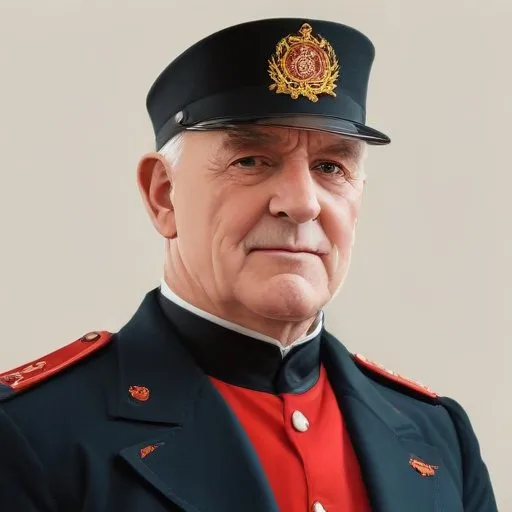
Leader of The Salvation Army, guiding the organization's humanitarian efforts and spiritual mission, known for his dedication to social service and evangelism.
Frederick Coutts is renowned for his dedicated service as the 8th General of the Salvation Army, a position he held from 1963 to 1969. During his tenure, he steered the organization towards a path of growth, spiritual revival, and social transformation.
Born on September 21, 1899, in Kirkcaldy, Scotland, Coutts was raised in a family of Salvation Army officers. He followed in their footsteps, becoming an Officer of the Salvation Army in 1920. Over the next decade, he served in various capacities, including divisional work and corps officer in the British Territory.
Coutts' literary talents were evident during his 18-year stint in the Literary Department of International Headquarters, where he wrote the International Company Orders from 1935 to 1946 and edited The Officers Review from 1947 to 1953. His literary expertise earned him the position of Literary Secretary, a role he held from 1952 to 1953.
In 1953, Coutts became the Training Principal at the International Training College, a position he held for four years. His leadership skills were further honed when he became the Australia Eastern Territorial Commander from 1957 to 1963.
In December 1963, Coutts was elected by the High Council of the Salvation Army as the 8th General of the Army, a position he held until his retirement in 1969.
Coutts married his first wife, Lieutenant Bessie Lee, in 1925. After her passing in 1967, he married Commissioner Olive Gatrall in 1970. Coutts retired on September 20, 1969, just before his 70th birthday. He passed away on February 6, 1986, at the age of 86, and is buried in New Camberwell Cemetery.
Frederick Coutts' tenure as General of the Salvation Army left an indelible mark on the organization. His leadership, literary contributions, and commitment to social justice continue to inspire generations of Salvationists and beyond.
As we reflect on Coutts' life and ministry, we are reminded of the power of dedication, perseverance, and servant leadership. His legacy is a testament to the transformative power of faith and the importance of serving others.
96 Years Old
The first female General of The Salvation Army, leading the organization from 1986 to 1993, known for her progressive reforms and humanitarian work. She was a pioneering figure in the Christian church, advocating for women's empowerment and social justice.
Born in 1907
The 10th General of the Salvation Army, a prominent Christian leader, oversaw the organization's global mission and humanitarian efforts, promoting faith, charity, and social justice. He played a significant role in shaping the organization's direction and policies.
Born in 1893
Led the Salvation Army, a global Christian movement, and oversaw its humanitarian efforts, especially in the areas of disaster relief and social services. He also played a key role in shaping the organization's spiritual direction.
Born in 1829
Founded a Christian organization that provides humanitarian aid, disaster relief, and social services, known for its brass bands and red kettles.
Born in 1856
The 2nd General of The Salvation Army, a prominent Christian leader, led the organization's global expansion and social service initiatives, particularly focusing on poverty alleviation and women's empowerment.
Born in 1865
The 4th General of The Salvation Army, a prominent leader of the Christian-based charity organization, known for her humanitarian work and social activism, particularly in the early 20th century.
