


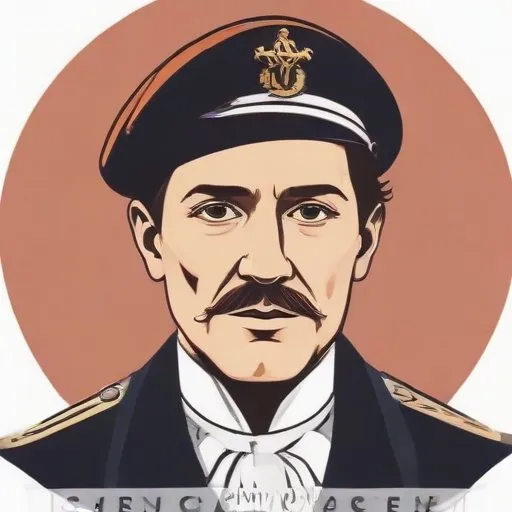
Lookout who spotted the iceberg that sank the Titanic, saving hundreds of lives with his warning. He was a key figure in one of the most infamous maritime disasters in history.
Frederick Fleet is forever etched in history as the British sailor who spotted the iceberg that sank the RMS Titanic on that fateful night of April 14, 1912. His frantic warning, "Iceberg, right ahead!" still resonates in our collective conscience, a haunting reminder of the tragedy that claimed over 1,500 lives.
Fleet's maritime career began at the tender age of 15, when he set sail as a deck boy on the RMS Oceanic. Over the years, he worked his way up to become an able seaman, earning a meager five pounds per month, plus an extra five shillings for lookout duty.
In April 1912, Fleet joined the crew of the RMS Titanic, along with five other watchmen. The ship's grandeur and promise of a new era in transatlantic travel were bittersweet for Fleet, who had already sailed for over four years as a lookout on the RMS Oceanic.
On the evening of April 14, 1912, Fleet and his fellow lookout, Reginald Lee, replaced George Symons and Archie Jewell at the crow's nest. The night was chilly, with temperatures plunging to below freezing, and the lookouts made do with two-hour shifts to brave the cold.
At 10:00 PM, Fleet and Lee received the order from second officer Charles Lightoller to keep a sharp lookout for any obstacles. It was then that Fleet spotted the iceberg, his sharp eyes piercing through the darkness to sound the alarm that would change the course of history.
In the aftermath of the disaster, Fleet testified at the subsequent inquiries, faulting the lack of binoculars for the delay in spotting the iceberg. His words, "We could have seen it a bit sooner... enough to get out of the way," still linger, a poignant rebuke to the tragedy that befell the Titanic.
Fleet's later life was marred by depression, which many believe was a direct result of the trauma he experienced on that fateful night. He died by suicide on January 10, 1965, at the age of 77, leaving behind a legacy that would forever be tied to the Titanic's tragic fate.
Fleet was born in Liverpool, England, on October 15, 1887, to a mother who abandoned him shortly after his birth. He was raised by a succession of foster families and distant relatives, a difficult upbringing that would shape his later life.
Frederick Fleet's story is one of tragedy, loss, and redemption, a testament to the human spirit that endures even in the face of unimaginable hardship. As we remember the Titanic's tragic fate, we also honor the memory of Fleet, the unsung hero who sounded the alarm that night.
Born in 1850
A British merchant navy officer who captained the RMS Titanic and went down with the ship in 1912, becoming a legendary figure in maritime history.
Born in 1873
Designed the ill-fated RMS Titanic, a massive ocean liner that sank on its maiden voyage, leading to significant changes in maritime safety regulations. He's also credited with designing several other notable ships.
Born in 1763
A German-American mogul who built a fur trading empire and invested in real estate, amassing a vast fortune, which he later used to support the arts and education.
Born in 1865
Wealthy owner of the American Smelting and Refining Company, who tragically went down with the Titanic, famously declaring "We've dressed up in our best and are prepared to go down like gentlemen!"
Born in 1845
German-American businessman and co-owner of the Macy's department store chain, who went down with the Titanic and became a symbol of courage and loyalty. He was a member of the New York State Senate and a prominent figure in the German-American community.
