


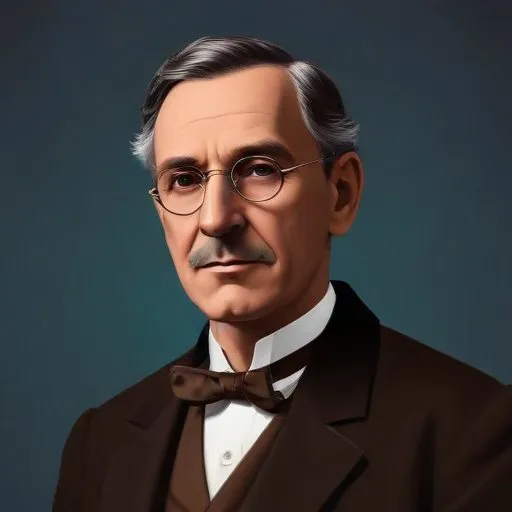
Developed innovative technologies to control air pollution and founded the Research Corporation, a non-profit organization that supports scientific research. He's also known for his philanthropic efforts, donating millions to various causes.
Frederick Gardner Cottrell, a renowned American physical chemist and inventor, is best known for his groundbreaking invention of the electrostatic precipitator, a device that revolutionized the fight against air pollution in the early 20th century. This innovative technology, which captures and removes pollutants from the air, has had a profound impact on environmental conservation and public health.
Born on January 10, 1877, in Oakland, California, Cottrell came from a prominent family with a rich history dating back to the settlement of America. His insatiable curiosity and love for learning earned him recognition from an early age. He devoured textbooks like novels, finishing high school at the tender age of 16 and graduating from the University of California, Berkeley, in just three years.
After completing his undergraduate studies, Cottrell taught chemistry at Oakland High School, saving money from his modest annual salary of $1,200 to fund his further education. His determination and perseverance eventually enabled him to pursue his graduate studies abroad, a common practice among American scientists at the time.
In July 1900, Cottrell set sail for Europe, where he spent several months exploring the continent and immersing himself in the scientific communities of England and France. During his European sojourn, he visited the Cavendish laboratories in Cambridge, Hyde Park, and Kensington Gardens in London, and the Exposition Universelle in Paris, where he marveled at the Eiffel Tower and Old Paris.
These experiences not only broadened his scientific horizons but also instilled in him a sense of wonder and awe for the potential of human ingenuity to shape the world.
Cottrell's most significant contribution to science and humanity was the invention of the electrostatic precipitator, a device that uses electrostatic charges to capture and remove pollutants from the air. This pioneering technology, which he patented in 1906, has had a profound impact on environmental conservation and public health.
The electrostatic precipitator's ability to remove pollutants from the air has been instrumental in reducing the negative impacts of industrial activities on the environment and human health. This invention cemented Cottrell's reputation as a visionary scientist and earned him recognition as a pioneer in the field of environmental science.
In 1912, Cottrell founded the Research Corporation for Science Advancement, a non-profit organization dedicated to funding scientific research and promoting scientific progress. This philanthropic endeavor has supported numerous groundbreaking projects and initiatives, leaving a lasting legacy in the scientific community.
Through his work with the Research Corporation, Cottrell demonstrated his commitment to advancing scientific knowledge and improving human lives. His selfless dedication to the cause has inspired generations of scientists and philanthropists.
Frederick Gardner Cottrell's remarkable life and achievements have left an indelible mark on the scientific community and the world at large. His pioneering work in air pollution control and science philanthropy has inspired countless individuals to pursue careers in science, technology, engineering, and mathematics (STEM).
Today, as the world grapples with the challenges of climate change, environmental degradation, and public health crises, Cottrell's legacy serves as a powerful reminder of the impact that human ingenuity and determination can have on shaping a better future for all.
Frederick Gardner Cottrell's life and achievements serve as a testament to the power of human ingenuity, determination, and philanthropy. His legacy continues to inspire and motivate individuals to work towards creating a better world for all.
